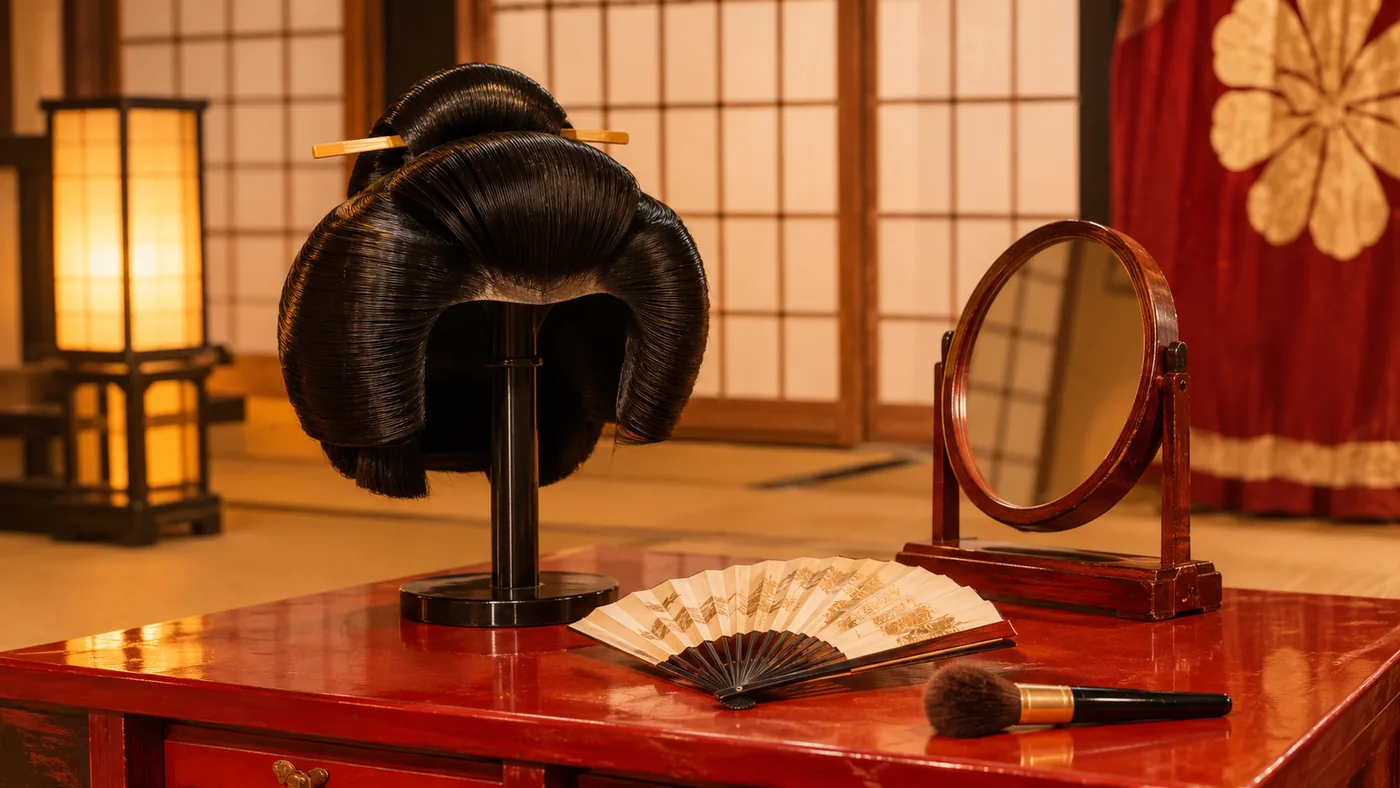
Booking choice: The Kabuki-za ticket, from $94 per person. Check dates Tour details
Kabuki-za sells most seats by the part, a matinee or an evening of 3 to 4 hours. Single-act seats, called hitomakumi in Japanese, let you buy just one piece of that part. They are a Kabuki-za speciality, sold for most performances there and only occasionally at other theatres, per the Kabuki Official Website.
Single acts used to be a same-day affair. In 2026 the 4th-floor seats can be reserved online, and a small block of upgrade seats on the 2nd level sits alongside the classic 4th-floor gallery. Below are the 2026 rules, the November 2026 prices, and how a single act compares with a full part. Our guide to buying kabuki tickets covers the full-part seats.
The quick answer
A single-act ticket lets you watch one act at Kabuki-za, usually from the 4th floor. Reserved 4th-floor seats go on sale online from noon the day before, and unreserved ones at the theatre on the day from 10:00. In November 2026 they cost 1,600 to 3,000 yen, and an upgrade seat on the 2nd level cost 5,800 to 10,800 yen. Acts last about 20 to 90 minutes, and some months run longer.
What is a single-act ticket at Kabuki-za?
A ticket for one act of the day's programme instead of the whole part. You sit on the 4th floor, the top of the theatre, or in the 2nd-level upgrade seats.
Each part at Kabuki-za holds about three plays or dances with intervals between them. A single-act ticket covers one of those pieces. The Kabuki Official Website pitches them at beginners, regulars and visitors short of time, and that matches how people use them: as a first look, as a second visit to a favourite scene, or as a fit between other plans.
Two products exist in 2026:
- Single Act Seat (4th level): the classic gallery seats, reserved online or unreserved on the day.
- Upgrade Single Act Seat (2nd level): a small reserved block closer to the stage, sold online.
Programmes, times and prices change every month and are published on the Kabuki Official Website's News page by the first day of each run.
How do I buy single-act tickets in 2026?
Reserved 4th-floor seats go on sale online from 12:00 noon JST the day before each show. Unreserved seats are sold on the day from 10:00 at the Single Act box office, on the left side of the main entrance.
The reserved seats are sold on Shochiku's e-tix ticket site, act by act. The unreserved ones are a same-day stock sold only while seats remain, and you can choose your seat from what is left. The Single Act box office takes cash and credit cards, per the Kabuki Official Website.
A few practical points:
- Set an alarm. Noon the day before is when the reserved seats open, and sales close when they are gone.
- Use the side door. Single-act holders enter by their own entrance, to the left of the main entrance.
- Be on time. In November 2026, latecomers for the second matinee act may wait a while to be seated because of the staging.
- Check on the day. Final act times can shift slightly after rehearsals, so the News page is the one to check on your visit day.
How much is a single act in November 2026?
From 1,600 to 3,000 yen on the 4th floor, and 5,800 to 10,800 yen for the upgrade seat on the 2nd level, depending on the act. Prices change every month.
November 2026 is the Kaomise, with Kanadehon Chushingura, the story of the 47 loyal retainers, played across the matinee and the evening. The single-act schedule, per the Kabuki Official Website:
| Act | Scenes | Time | 4th floor | 2nd-level upgrade |
|---|---|---|---|---|
| 1 (matinee) | Chushingura Acts 1 and 3 | 11:00 to 12:36 | 2,200 yen | 7,900 yen |
| 2 (matinee) | Chushingura Act 4 | 13:11 to 14:43 | 2,200 yen | 7,900 yen |
| 3 (matinee) | Michiyuki dance | 15:03 to 15:42 | 1,600 yen | 5,800 yen |
| 4 (evening) | Chushingura Acts 5 and 6 | 16:30 to 18:15 | 3,000 yen | 10,800 yen |
| 5 (evening) | Chushingura Acts 7 and 11 | 18:45 to 21:17 | 3,000 yen | 10,800 yen |
A special announcement starts at about 10:50 before the matinee, and acts 1 and 5 each include a short interval. The upgrade seat is not sold for the matinees on 1, 14 and 18 November or the evenings on 1 and 22 November 2026. The 25th is the last day of the run, and there are no shows on the 9th and 17th.
Our November 2026 Chushingura notes cover the programme in more detail.
What is the upgrade single-act seat?
A reserved single-act seat on the 2nd level, on the right side in rows 3 to 5, in the corner of the area normally sold as First Class. It is closer to the stage and roomier than the 4th floor.
Upgrade seats go on sale online from 12:00 noon the day before each show, like the 4th-floor reserved seats, and same-day sales end at 17:00. After that, the 4th floor is the only single-act option for the evening. Some days have no upgrade seats at all, so check the schedule first, per the Kabuki Official Website.
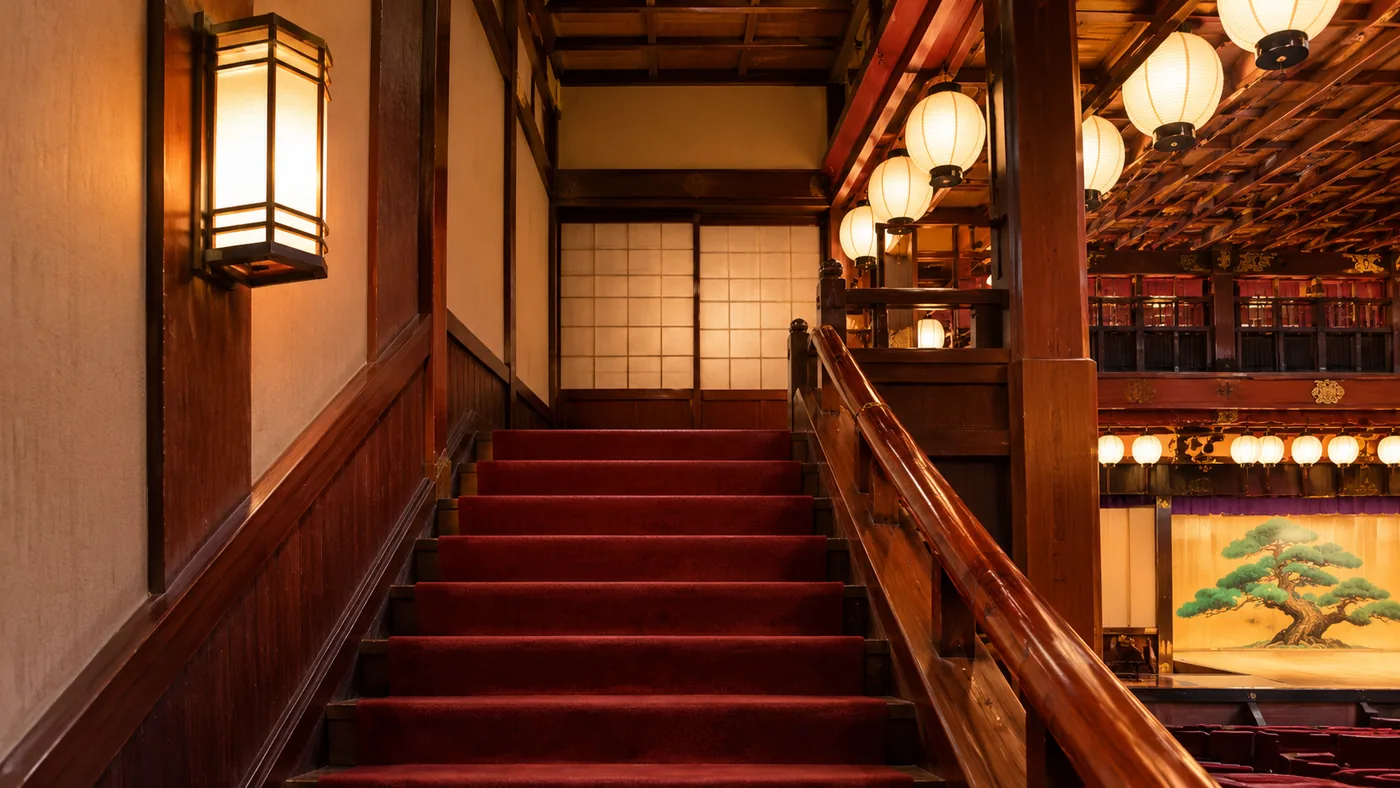
The upgrade also lets you pass through the main lobby on your way in, with its red carpet and lanterns. Staff may ask you to wait a moment before showing you to your seat.
What is the view like from the 4th floor?
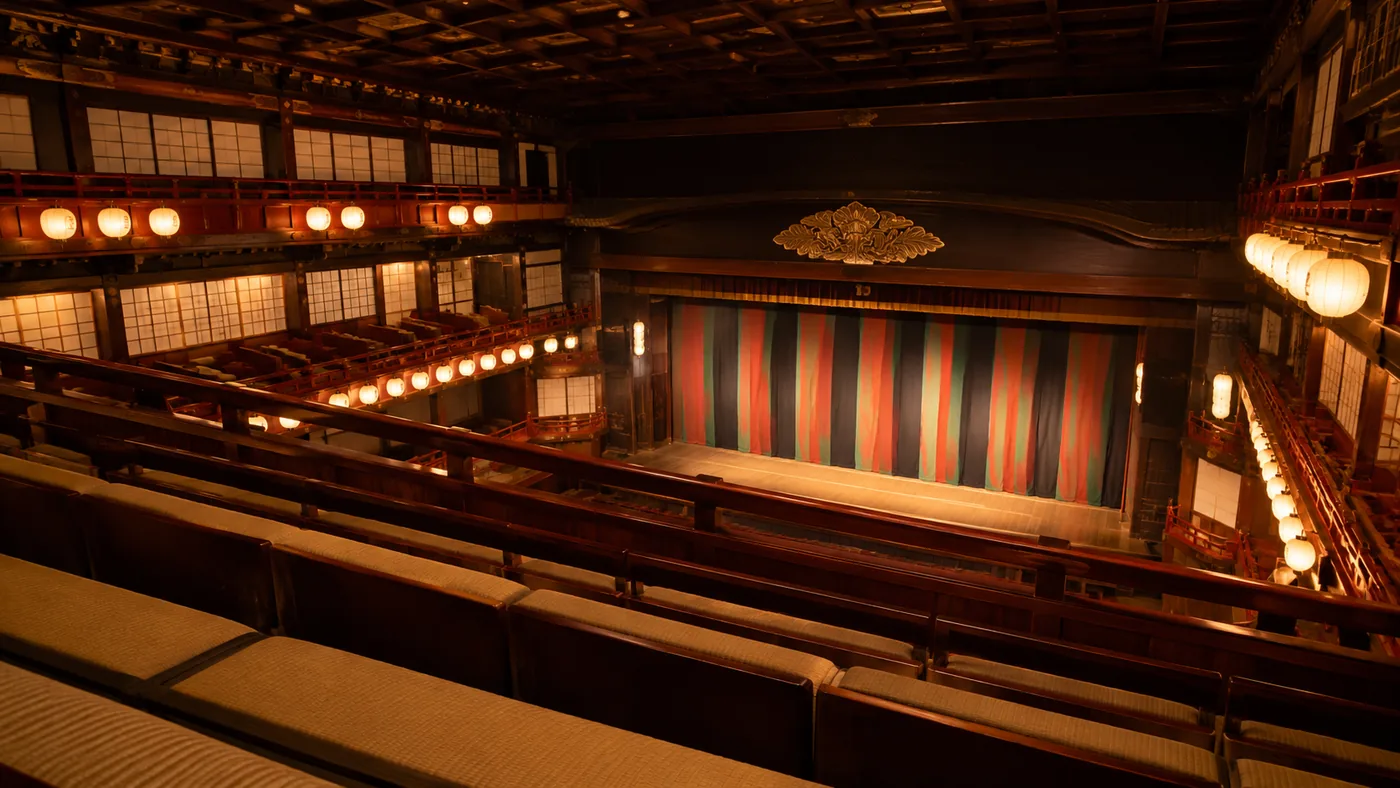
Distant but complete enough to follow the play. The 4th floor is the top of the theatre, the hanamichi walkway is out of sight, and parts of the main stage may be hidden.
The Kabuki Official Website is plain about it: the 4th level is the furthest from the stage, the hanamichi (the raised walkway through the audience used for entrances and exits) cannot be seen, and the first row sits close to a railing that may be in view. Seating is also tighter than on the lower floors.
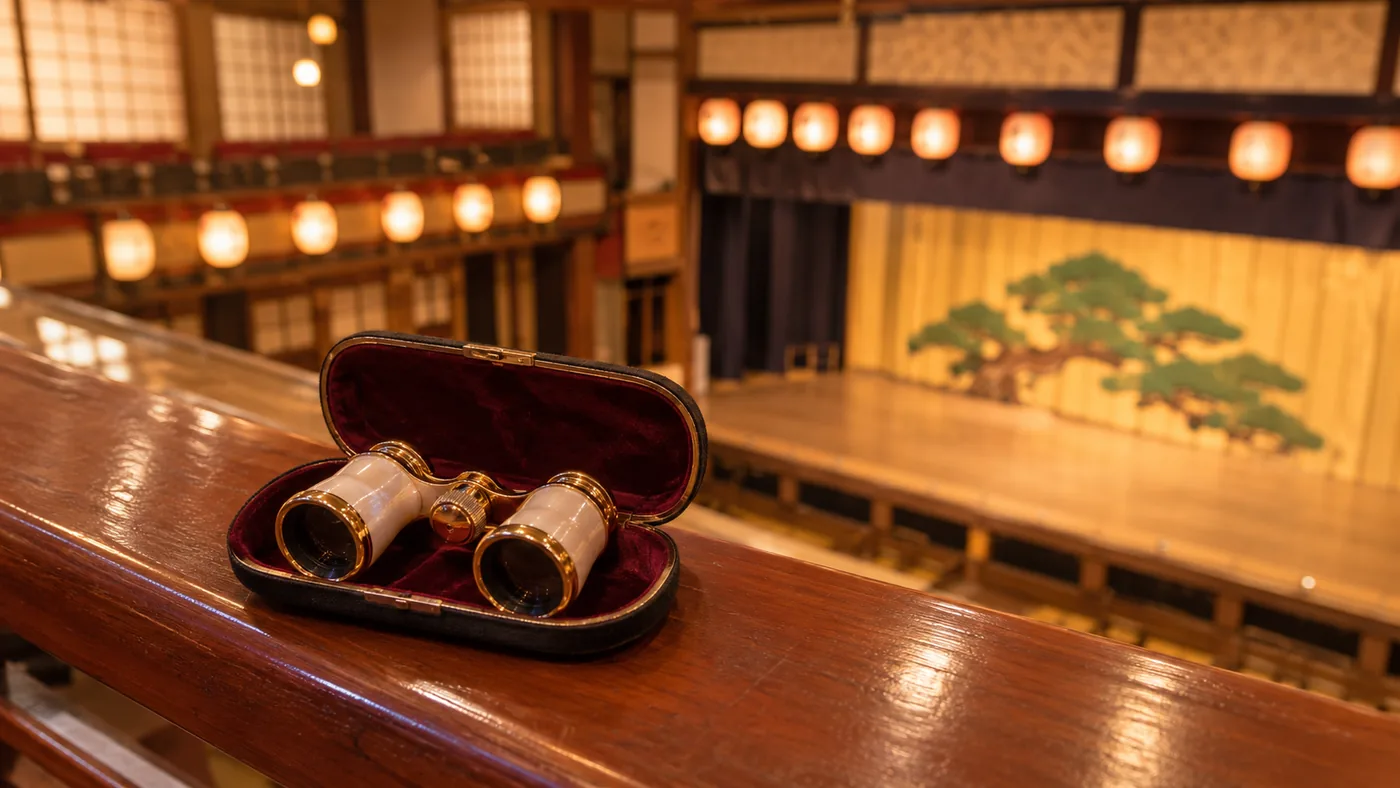
What you do get is the sound. The live music, the clappers and the shouts from the audience carry all the way up, and from above you see the whole stage picture at once. Opera glasses help with faces and costumes; the 4th-level counter has them, along with programmes in Japanese and English.
If the hanamichi matters to you, and it does for the big exits, a full-part seat on the 1st or 2nd floor is the way to see it. The GetYourGuide Kabuki-za ticket is sold in First Class (1st or 2nd floor) and Second Class A (1st floor).
Do single acts have English captions?
Yes, for most acts. The caption device costs 1,000 yen per act, cash only, and is rented on the 4th level for single-act seats.
Kabuki-za rents caption devices in English or Simplified Chinese for 1,500 yen per full part and 1,000 yen per single act, cash only, per the Kabuki Official Website. For a single act you rent the device on the 4th level, not on the ground floor where full-part guests collect theirs.
Two catches. Captions may not be offered for a very short act. And if you watch several single acts, one device covers only the part it was rented for, such as the matinee or the evening, per the Kabuki Official Website. A matinee act and an evening act mean two rentals.
On the GetYourGuide full-part ticket the caption service is already included, so there is nothing to rent and no cash to carry for it.
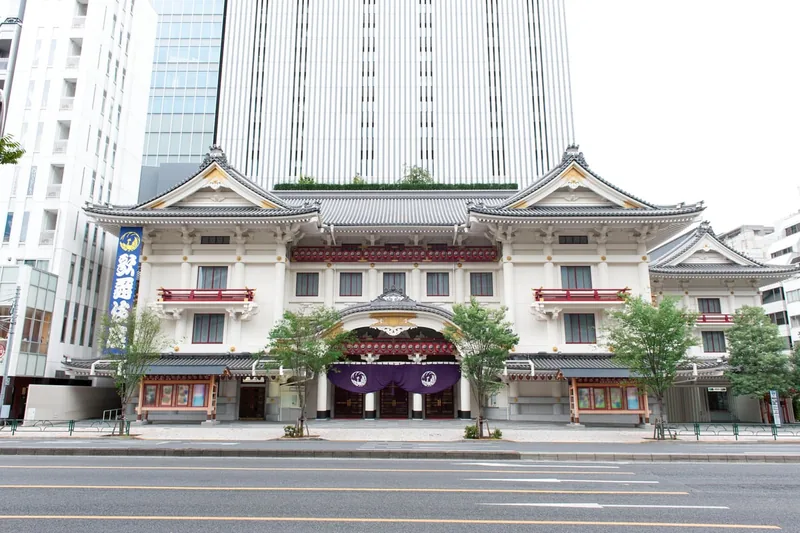
A full part from a 1st or 2nd-floor seat, the hanamichi in view, and the English caption device included in the ticket.
Explore the Kabuki-za ticket Tour detailsHow long does a single act last, and can I watch more than one?
Acts usually last about 20 to 90 minutes; in November 2026 they run from 39 minutes to about 2.5 hours. You can buy several acts, and you leave your seat between them.
Between acts, single-act holders go out to the 4th-level lobby. With an online ticket you show your QR code to go back into the auditorium; once you have shown it, you need a pass from staff to leave the theatre. With a box-office ticket, staff guide you back in when the next act is ready.
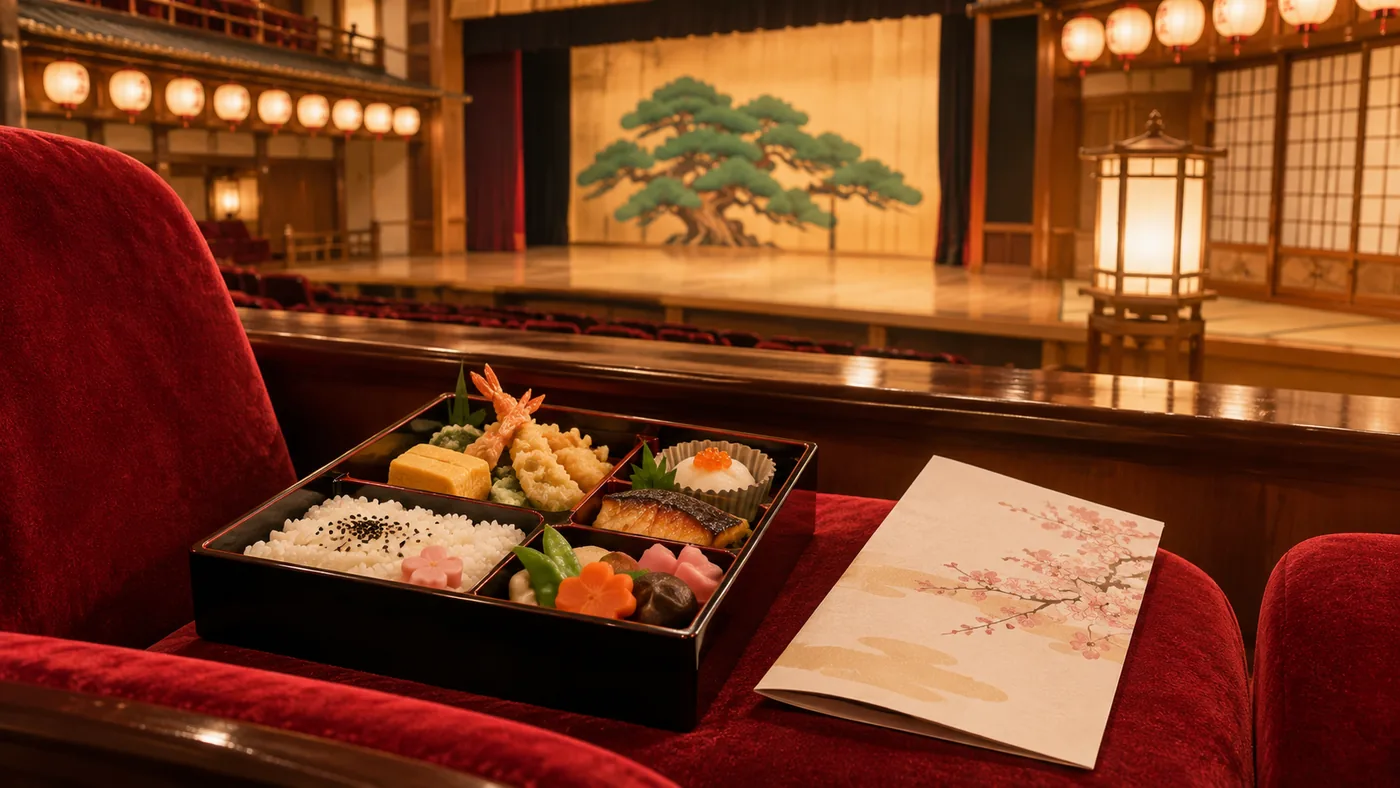
Plan your food. Single-act holders cannot use the shops and restaurants on levels 1 to 3, and the 4th level has drink vending machines and lockers (100 and 200 yen). Bento and sandwiches from Kobikicho Square on B2, bought before the show, are the easy answer. Eating is allowed in the intervals only.
If you want the whole matinee or evening, a full-part seat lower down gives you the hanamichi, the intervals in the lobby and a bento in your seat.
Single act or full part: which suits me?
A single act suits a short first look, a tight schedule or a second visit. A full part suits a first proper evening at kabuki, with the walkway, the intervals and the whole programme.
| Single act (4th floor) | Full part (GetYourGuide ticket) | |
|---|---|---|
| Length | About 20 to 90 minutes per act | 3.5 hours, one interval |
| Price | 1,600 to 3,000 yen in November 2026 | From $94 |
| Seat | 4th floor, reserved or unreserved | First Class (1st or 2nd floor) or Second Class A (1st floor) |
| Hanamichi | Out of sight | In view from 1st-floor seats |
| Captions | 1,000 yen extra, cash | Included |
| Booking | Online from noon the day before, or on the day | In advance, free cancellation up to 2 days before |
Our view: if this is your one kabuki night in Tokyo, take the full part. If you are curious and short of time, a single act on the 4th floor is a cheap first taste.
A seat lower down, the whole matinee or evening, the hanamichi in view and English captions in the ticket.
Check dates for the Kabuki-za ticketFrequently asked questions
Can I buy single-act tickets in advance?
Only from noon the day before. Reserved 4th-floor and 2nd-level upgrade seats go on sale online at 12:00 JST the day before each show, and unreserved seats are sold at the theatre on the day.
Are single-act tickets sold at other theatres?
Mostly at Kabuki-za in Tokyo. The Kabuki Official Website says they are occasionally offered at other theatres.
Can I eat during a single act?
No. Eating is allowed only in intervals, and single-act holders cannot use the shops on levels 1 to 3, so buy a bento in Kobikicho Square on B2 before the show.
Are single-act prices the same every month?
No. Prices and times change with each programme. In November 2026 4th-floor acts cost 1,600 to 3,000 yen.
Ready to book
Choose your ticket
Free cancellation on every option: Kabuki-za Kabuki Show Ticket with English Captions up to 2 days before; Asakusa Taishu Engeki Show at Mokubakan Theatre up to 24 hours before; Shamisen Lesson with Kabuki Music up to 24 hours before. Prices are from-prices in USD and move with the season.
Kabuki-za Kabuki Show Ticket with English Captions
- Ticket for one full part (matinee or evening)
- First-class or second-class A seat, by option
- English or Simplified Chinese caption service
Asakusa Taishu Engeki Show at Mokubakan Theatre
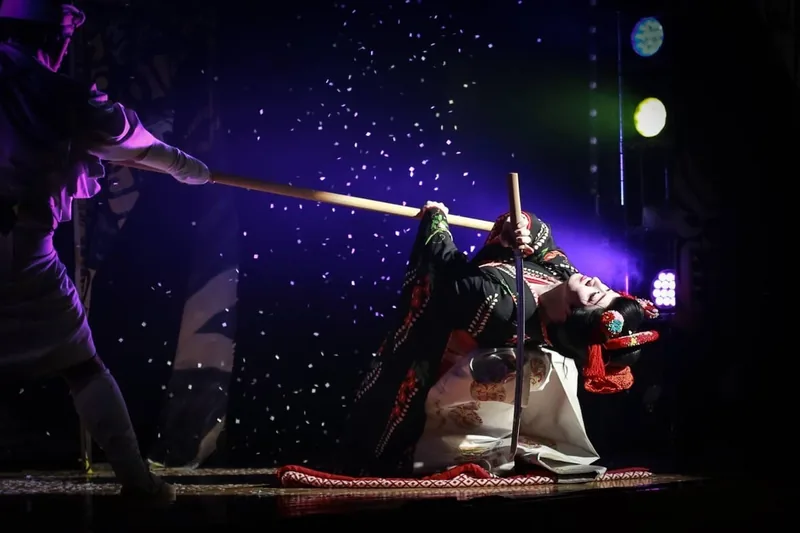
- One taishu engeki performance (up to 90 minutes)
- Photo time with the performers
- Guide option: English introduction and a canned drink
Shamisen Lesson with Kabuki Music
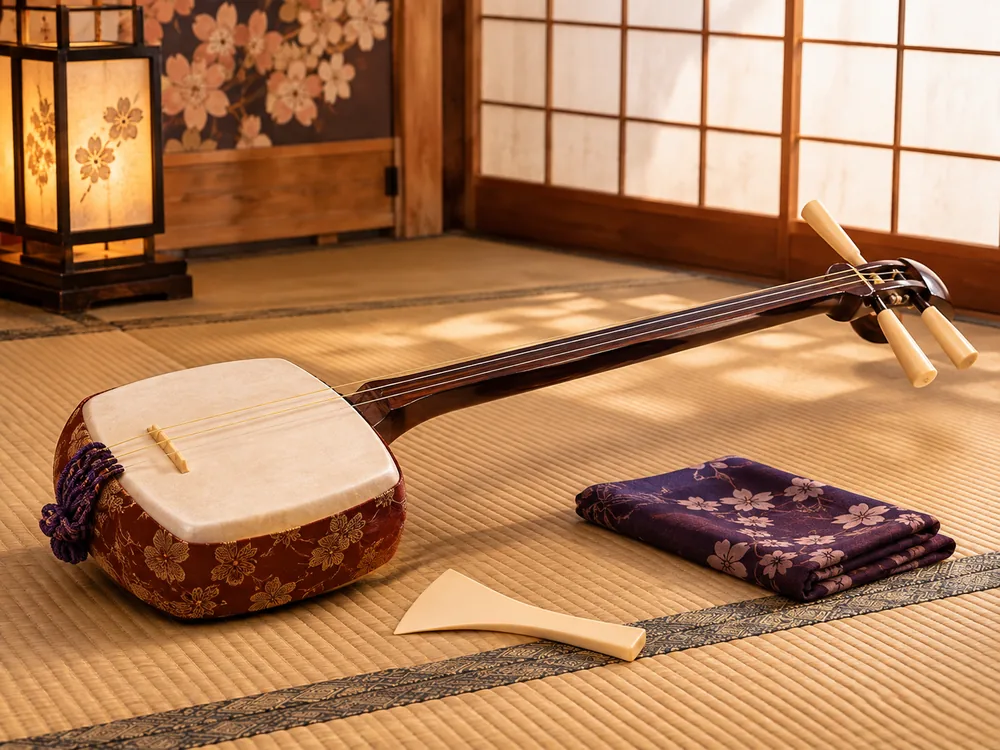
Learn the shamisen with a master of kabuki music