Booking choice: The Kabuki-za ticket, from $94 per person. Check dates Tour details
People often mix up the two, and they are related. Noh is the older, quieter form, built around masks and a bare cypress stage. Kabuki came about two centuries later, louder and more colourful, and borrowed plays from noh and from bunraku, the puppet theatre. Japan Guide counts the three as the country's major classical theatres.
Below: a side-by-side table, the mask question, the costumes and their names, why kabuki actors cross their eyes, bunraku, a noh seat with English subtitles in Tokyo, and which one to see first.
The quick answer
Noh is masked, slow and spare, from the 14th century; kabuki is unmasked, with bold make-up, fast costume changes and live shamisen music, from 1603. In Tokyo you can see kabuki at Kabuki-za with English captions, from $94, and noh with kyogen at the National Noh Theatre with a subtitle screen at every seat, from $26.
What is the difference between kabuki and noh?
Noh is a masked, slow and highly restrained theatre from the 14th century. Kabuki, from 1603, uses painted make-up instead of masks, big costumes, stage machinery and a walkway through the audience.
Side by side, for a first visit:
| Noh (with kyogen) | Kabuki | |
|---|---|---|
| Began | Shaped in the 14th century by Kan'ami and his son Zeami | 1603, Izumo no Okuni on the Kamo riverbed in Kyoto |
| Faces | Carved wooden masks for the main role | No masks: white base and kumadori make-up |
| Stage | A bare cypress stage with a painted pine and a bridgeway | A wide stage, revolving platform, traps and the hanamichi walkway |
| Music | Flute, drums and a chorus | Shamisen, singers, drums and sound effects |
| Pace | Slow, spare, poetic | Bold poses, quick changes, drama and dance |
| UNESCO | Nogaku: proclaimed 2001, inscribed 2008 | Proclaimed 2005, inscribed 2008 |
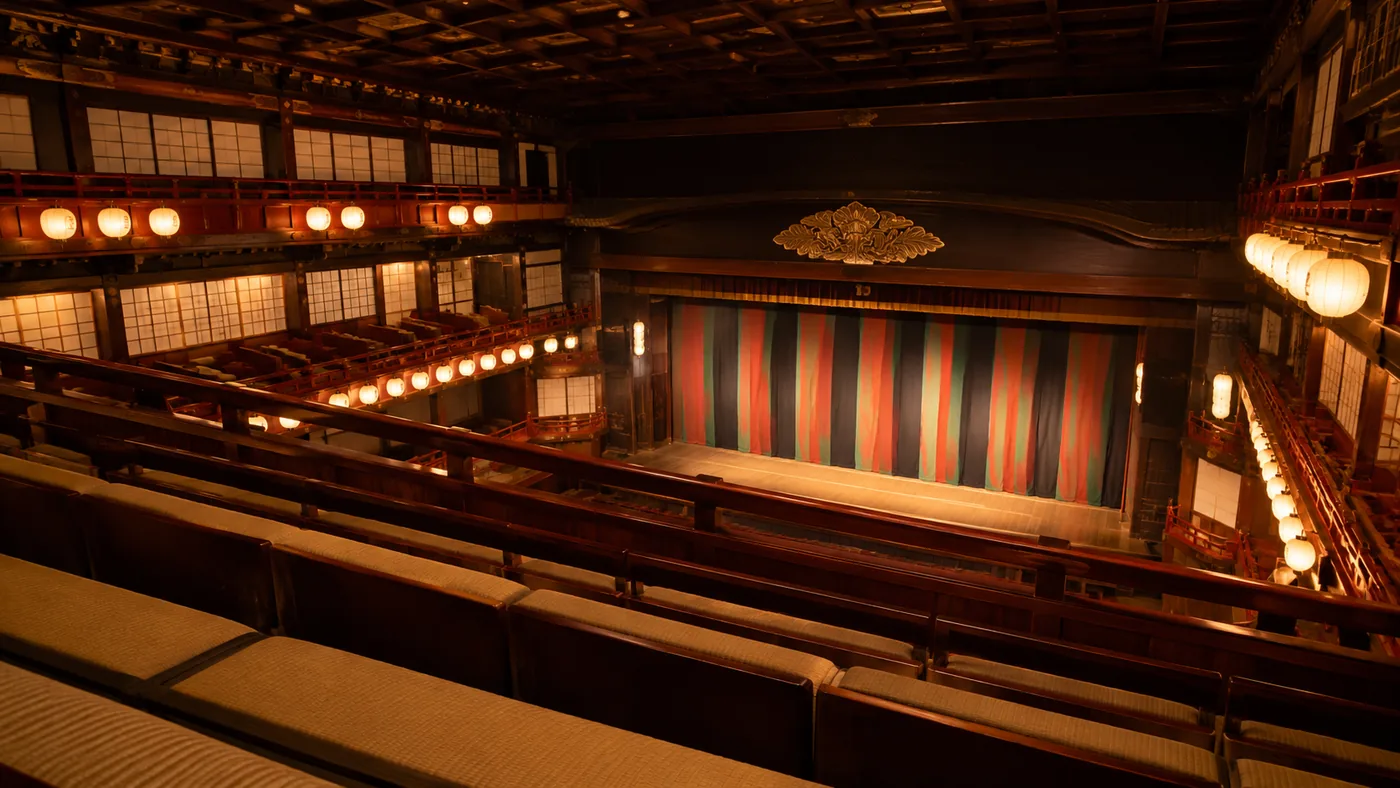
| In Tokyo | National Noh Theatre, Sendagaya | Kabuki-za, Ginza (1,808 seats plus 4th-floor single-act seats) |
| English help | Subtitle screen at every seat | Caption device, 1,500 yen or included in the ticket |
Noh and kyogen usually share a bill. Kyogen is the comic partner: spoken plays, mostly without masks, about ordinary people, which UNESCO traces to the humorous side of the old sangaku entertainments. Kabuki took some of its best-known plays straight from noh: Kanjincho, first staged in its current form in 1840, comes from the noh play Ataka.
Does kabuki use masks?
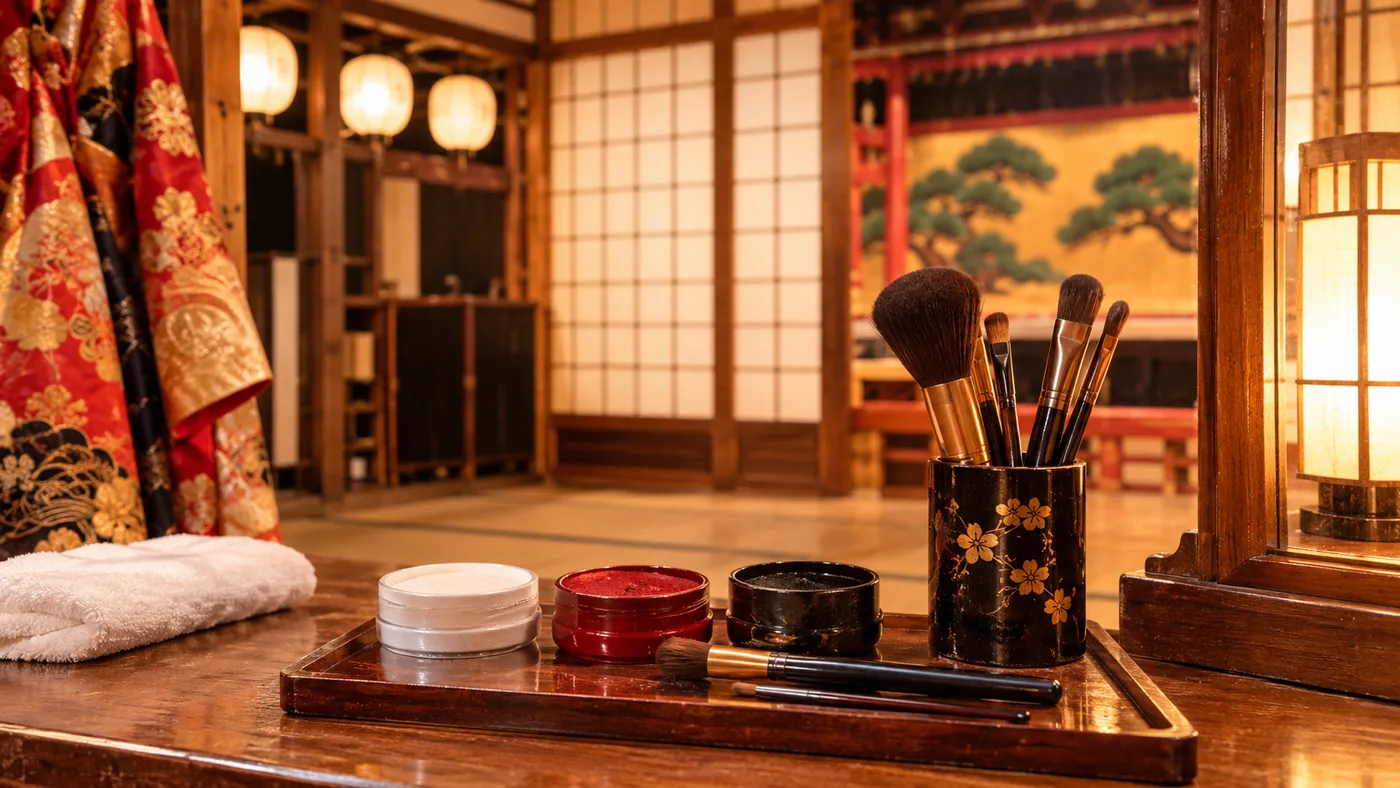
No. Kabuki actors paint their faces instead: a white base called oshiroi, and for some roles kumadori, bold lines that work like a mask. Noh is the theatre with the carved masks.
Kumadori colours carry meaning, and once you know them you can read a character on sight:
- Red lines: passion, heroism, a righteous character.
- Blue or black: villainy, jealousy, the bad side.
- Green: the supernatural.
- Purple: nobility.
Actors do their own make-up before each performance, which is why a kabuki face can change from one month to the next. At the end of a performance some actors press a cloth onto the painted face to make an oshiguma, a face print kept as a souvenir. The Gifu kabuki actor experience ends with one of your own, after kumadori make-up and a scene on stage.
What are noh masks, and what do they show?
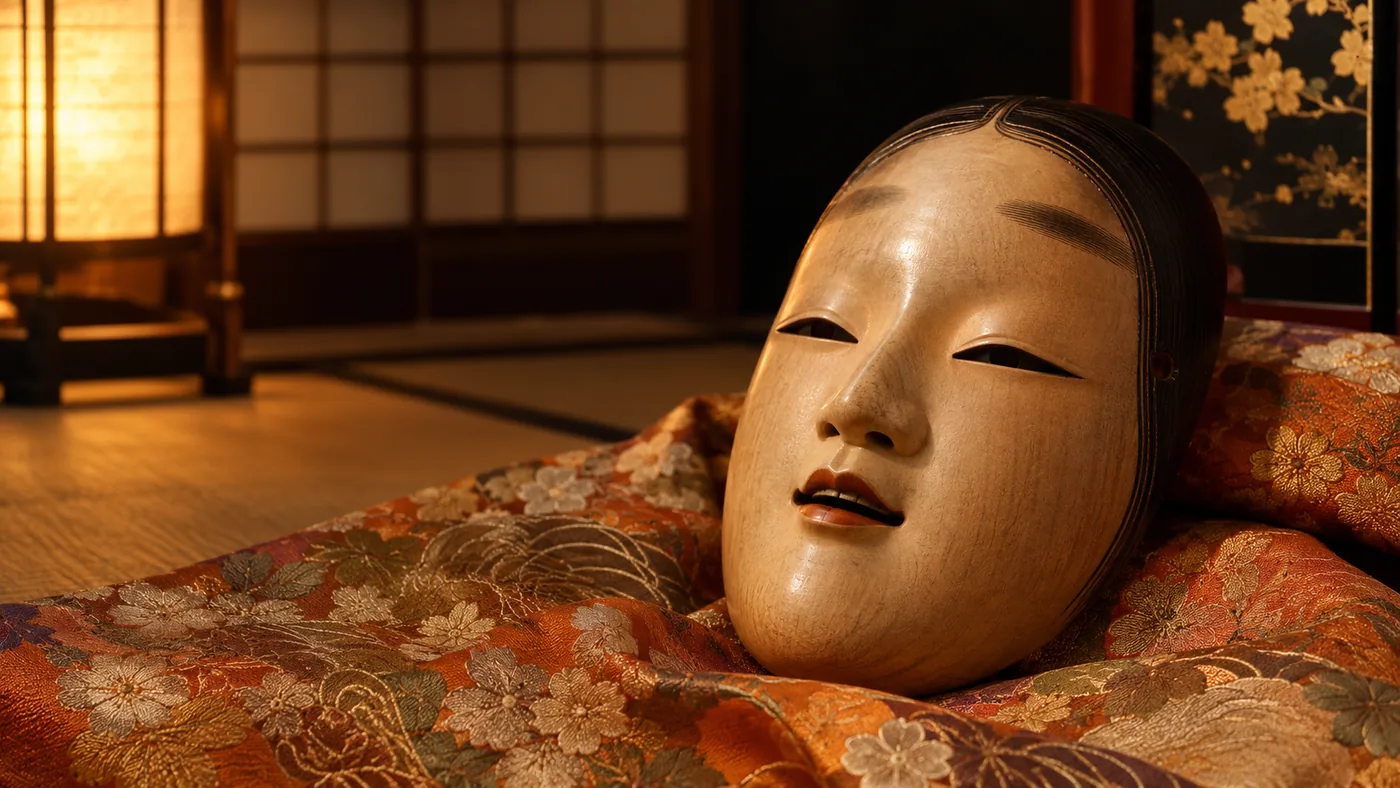
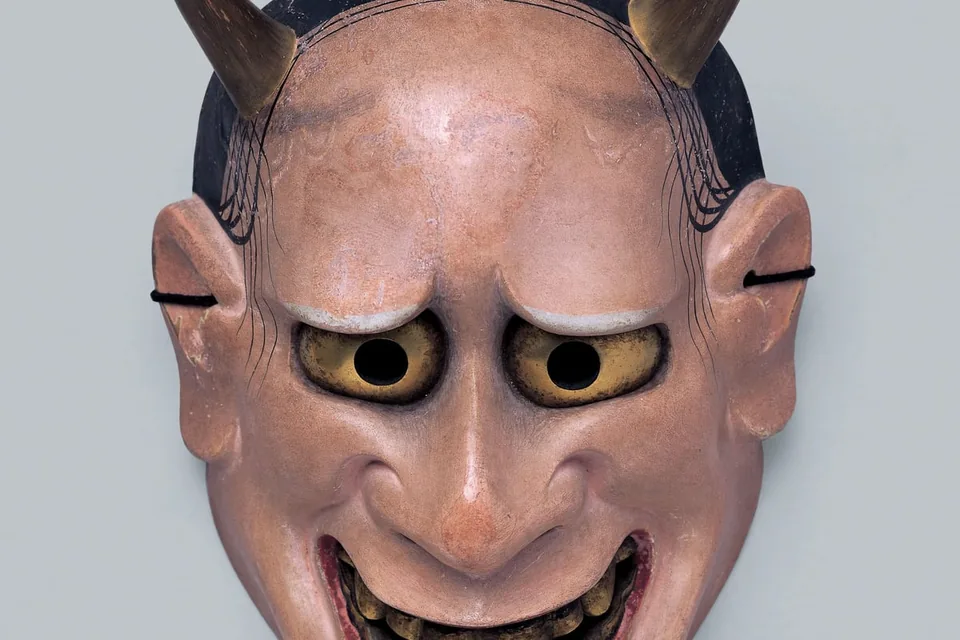
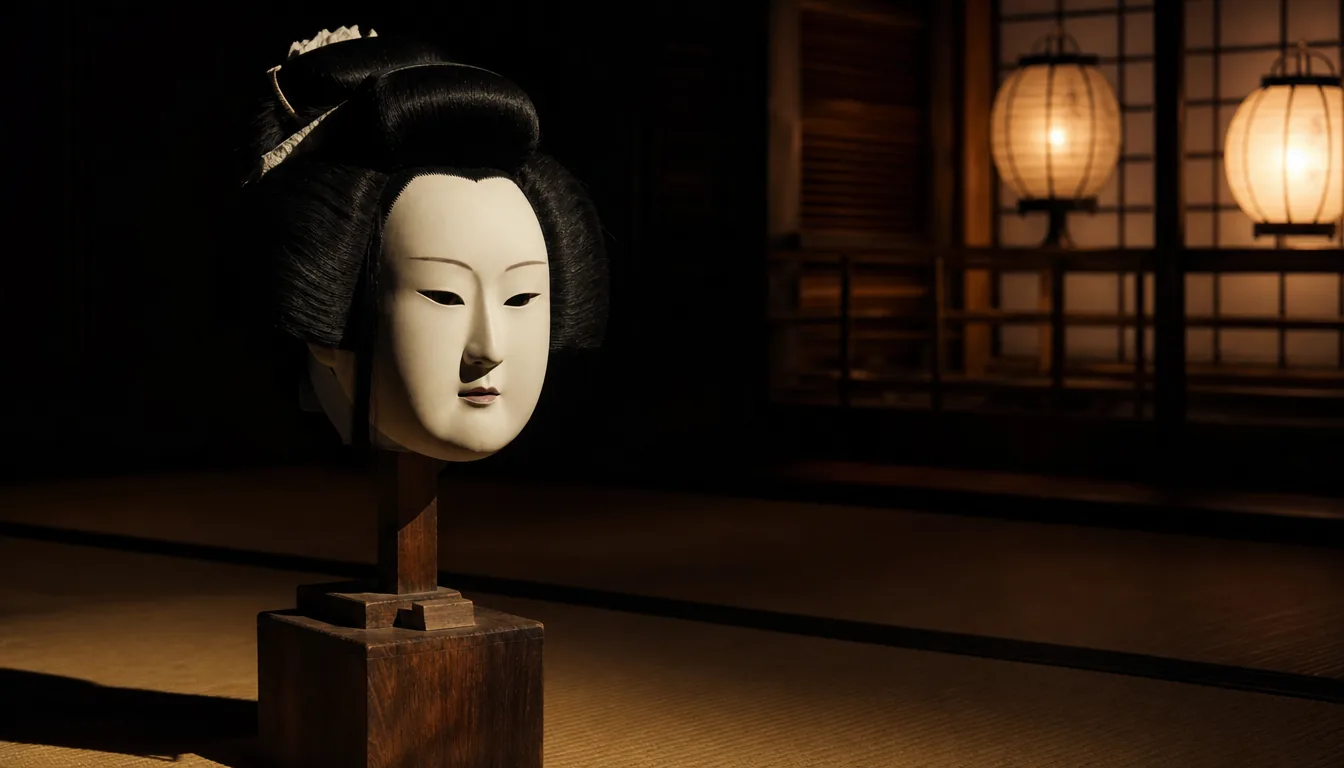
Noh masks are carved from Japanese cypress and painted. They are used for the main role when it is a ghost, a woman, a child, an old person or a demon; a living man is often played without one.
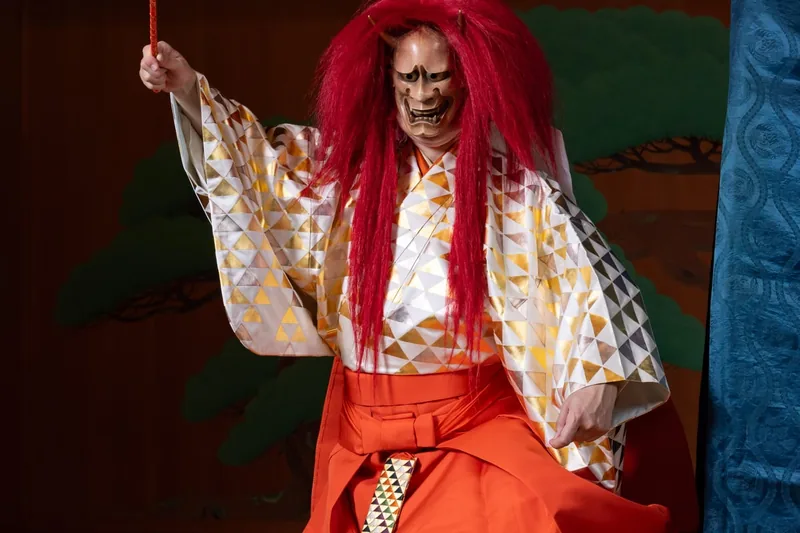
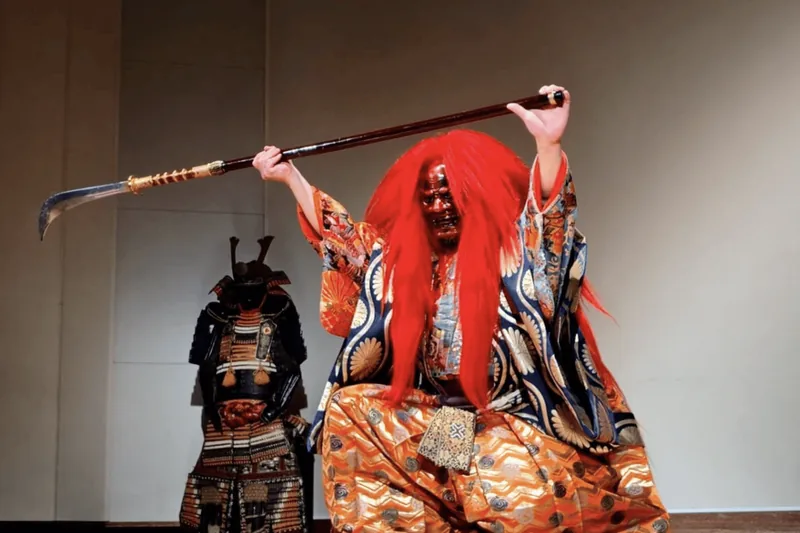
The actor tilts the mask slightly up or down, and the same carved face seems to brighten or cloud over. The horned demon mask in the photo below belongs to the fiercest roles. Kyogen actors wear masks only for some parts, such as animals or gods, and act most comic roles bare-faced.
The masks are old: UNESCO notes that noh grew out of sangaku, entertainments brought to Japan from China in the 8th century, and the form took its current shape with Kan'ami and Zeami in the Muromachi period. Zeami alone is credited with over 50 noh plays, per the-noh.com.
What are kabuki and noh costumes called?
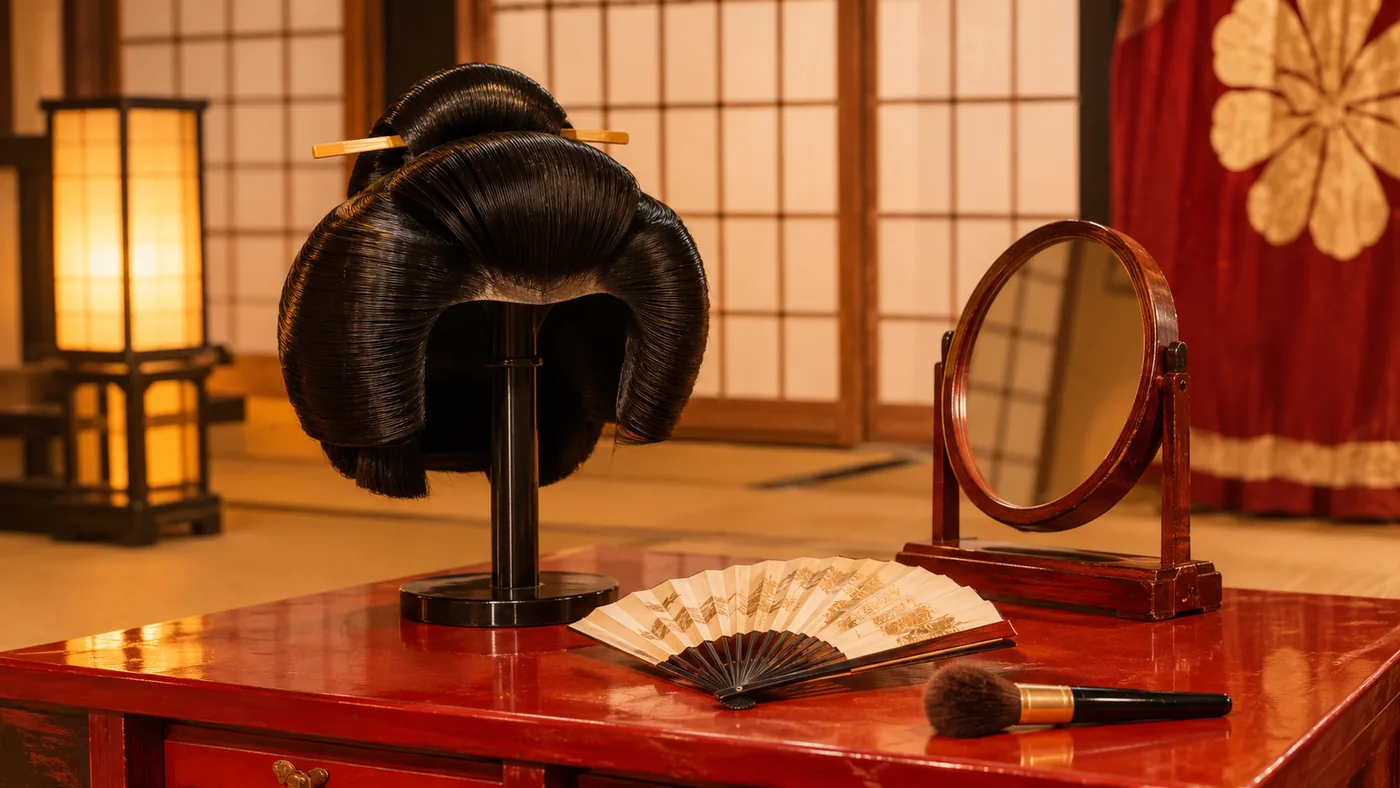
In noh the costumes are shozoku, silk robes with seasonal or Chinese-style patterns. In kabuki the costume is a layered kimono, with a wig called katsura made for each role.
A few names that help when you read a programme:
- Shozoku (noh): the robes, in two broad styles: wayo, Japanese patterns with flowers and seasons, and karayo, bold Chinese-style patterns with lions or dragons, per Japan's tourism agency.
- Katsura (kabuki): the wig, built on a thin base of beaten copper. A wig master quoted by the Taipei Times in April 2026 counted about 400 wig types for female roles and 1,000 for male roles.
- Hikinuki and bukkaeri (kabuki): costume reveals on stage. A kuroko pulls away the outer layer and the character's true nature shows in a second.
- Oshiroi and kumadori (kabuki): the white base and the bold lines, from the section above.
Want to wear one? The Gifu experience dresses you in kimono and wig; Marco wrote: "Wearing authentic historical costumes made the experience even more special." (May 2026)
Kumadori make-up, a wig and a costume, then a short scene on a wooden stage in Gifu, for up to 4 people.
Check dates for the kabuki actor experience in GifuWhy do kabuki actors cross their eyes?
It is part of the mie, the held pose at a dramatic peak: for an angry or agitated character the actor may cross his eyes to show the feeling at its strongest.
Watch for the drums and the wooden clappers. They speed up, the actor swings his head, freezes and fixes the stare, and the audience calls his house name. The Ichikawa Danjuro family has its own version, the nirami, a glare at the audience that is believed to drive out evil, per the family's official Naritaya site.
Noh has nothing like it. Its actors never cross their eyes, because the mask hides them: the feeling is carried by the angle of the mask and the chanting.
What is bunraku, and how does it connect to kabuki?
Bunraku is Japan's puppet theatre: large puppets worked by three visible puppeteers, with one chanter voicing every role and one shamisen player. Many famous kabuki plays were written for bunraku first.
UNESCO proclaimed Ningyo Johruri Bunraku in 2003 and inscribed it in 2008. The form grew in the early Edo period, around 1600, when puppetry met a sung storytelling style called joruri. Its home today is the National Bunraku Theatre in Osaka, opened in 1984.
The link with kabuki is the plays. Kanadehon Chushingura (1748) and Yoshitsune Senbon Zakura (1747) were puppet plays before kabuki took them on, and in those plays you will still see a chanter and a shamisen player at the side of the kabuki stage. In November 2026 Kabuki-za stages the whole of Kanadehon Chushingura across matinee and evening; our November 2026 note has the times.
Where can you watch noh in Tokyo with English subtitles?
At the National Noh Theatre in Sendagaya, opened in 1983, where every seat has a personal subtitle screen in English and Japanese. A noh and kyogen ticket on GetYourGuide is from $26.
The noh and kyogen ticket is sold by the National Theatre itself. It covers a programme of about 2 hours, with noh and kyogen pieces, and the screen at your seat runs the text in English or Japanese. Per the listing:
- Getting there: about 5 minutes on foot from JR Sendagaya Station, or from Kokuritsu-kyogijo Station on the Toei Oedo Line (Exit A4).
- On the day: exchange your voucher for a theatre ticket at the entrance; the lobby opens 1 hour before the performance.
- Seats: assigned by the theatre.
- Not allowed: photos, video and audio recording inside; not for children under 5.
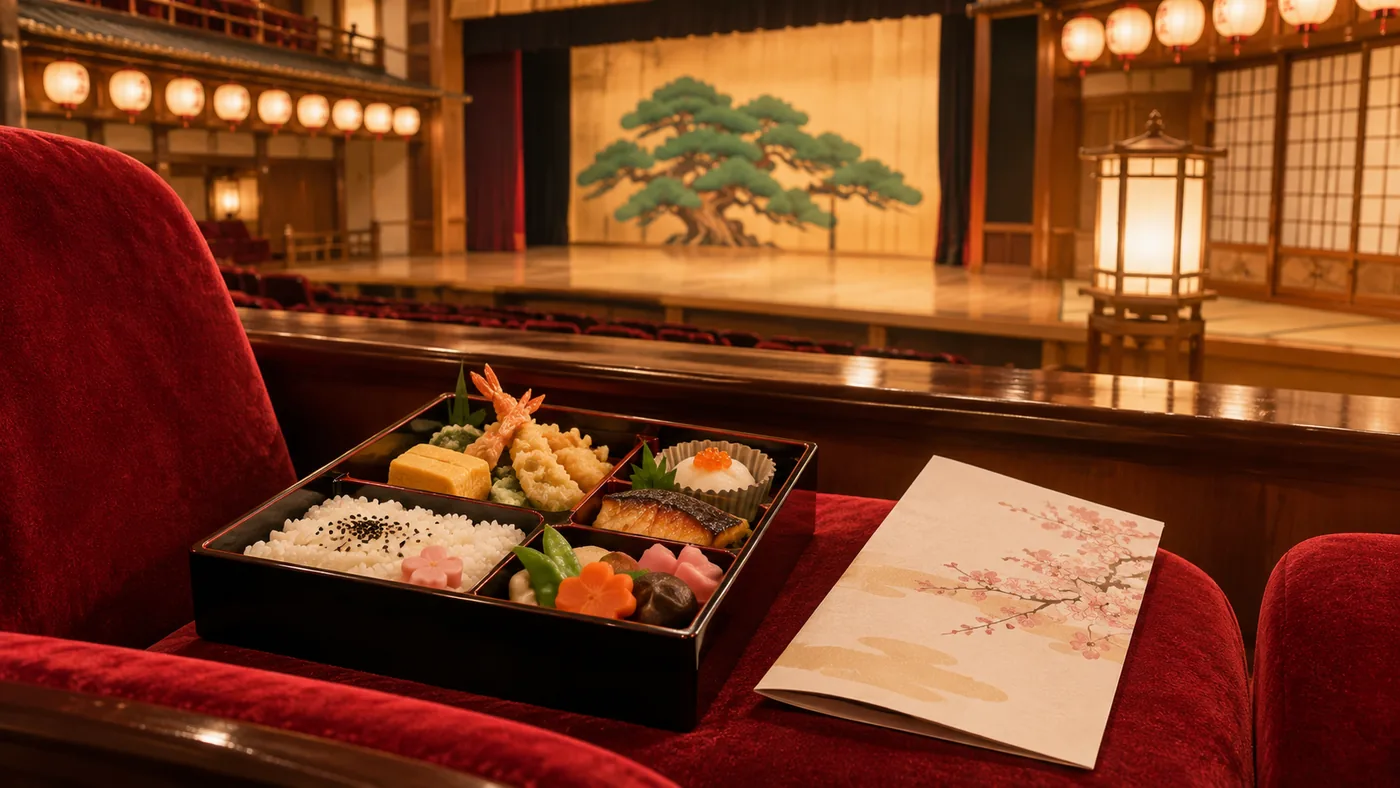
The listing has only a few dates a year, so check its calendar early. The theatre is far smaller than Kabuki-za, and the stage is the classic cypress stage with the painted pine on its back wall.
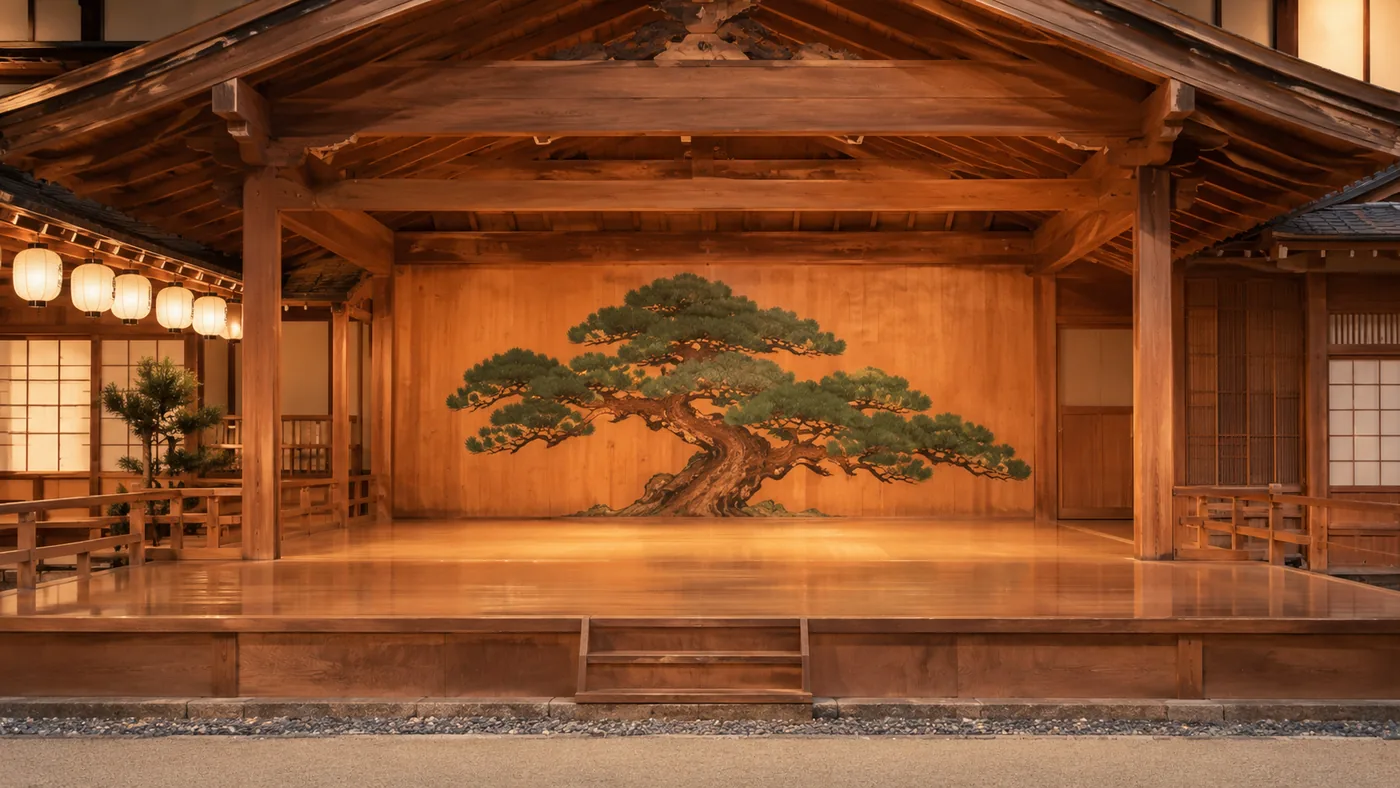
Noh and kyogen at the National Noh Theatre, with English subtitles on a screen at your seat.
Explore noh and kyogen at the National Noh Theatre Tour detailsKabuki or noh: which should you see first?
For a first night of Japanese theatre, kabuki is the easier start: colour, music, big poses and English captions. Choose noh if you want stillness, masks and poetry, and see both if you have the time.
A quick way to decide:
- See kabuki first if you like spectacle, a story you can follow and a bento in the interval. The Kabuki-za ticket covers a full part with captions.
- See noh first if you like slow music and dance, and quiet theatres. The programme is about 2 hours.
- Try it yourself: the Asakusa bugaku show is a 1-hour samurai-arts show founded in 2006 as a blend of samurai arts and noh. After a live sword and naginata performance, you try samurai postures, noh gestures and chanting from your seat.
The history behind all three, from Okuni's riverbed dances to today's acting families, is in our kabuki history guide.
Samurai postures, noh gestures and chanting after a live sword show, by Kaminarimon in Asakusa.
Check dates for the Asakusa bugaku showFrequently asked questions
Is noh older than kabuki?
Yes. Noh took its form in the 14th century with Kan'ami and Zeami; kabuki began in Kyoto in 1603. Kabuki later adapted noh plays such as Ataka, which became Kanjincho.
Do kabuki actors wear masks?
No. Kabuki actors wear painted make-up, a white base and for some roles kumadori lines. The carved masks belong to noh.
Is there English at a noh performance in Tokyo?
Yes. At the National Noh Theatre every seat has a personal subtitle screen in English and Japanese, and the GetYourGuide ticket includes it.
Is bunraku the same as kabuki?
No. Bunraku is puppet theatre, with three puppeteers per main puppet, a chanter and a shamisen player. Many kabuki plays started as bunraku plays.
Ready to book
Choose your ticket
Free cancellation on every option: Noh & Kyogen at the National Noh Theatre up to 24 hours before; Kabuki-za Kabuki Show Ticket with English Captions up to 2 days before; Asakusa Bugaku Samurai Show & Experience up to 24 hours before. Prices are from-prices in USD and move with the season.
Noh & Kyogen at the National Noh Theatre
Noh and kyogen, the older masked theatre, with subtitles
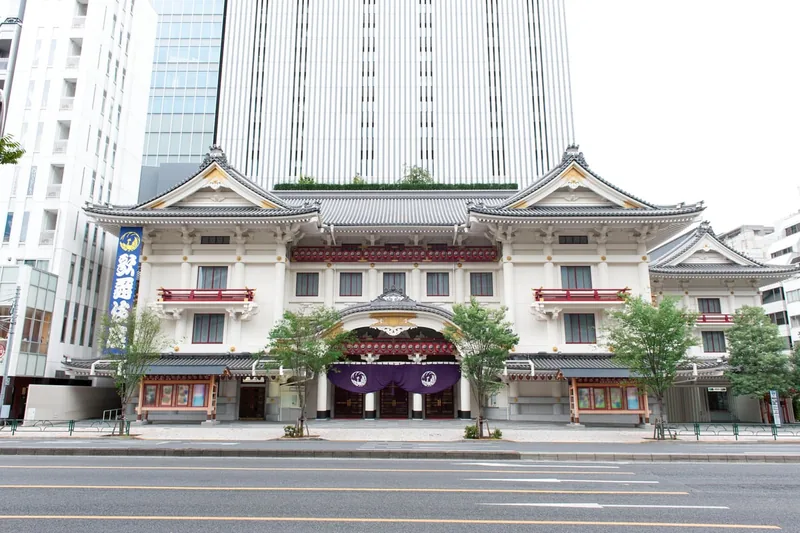
Kabuki-za Kabuki Show Ticket with English Captions
- Ticket for one full part (matinee or evening)
- First-class or second-class A seat, by option
- English or Simplified Chinese caption service
Asakusa Bugaku Samurai Show & Experience
A samurai-arts show by Kaminarimon, then try the postures