Booking choice: The Kabuki-za ticket, from $94 per person. Check dates Tour details
Kabuki looks formal from the outside. Inside it is relaxed: there is no dress code, you can eat at your seat between the plays, and a small screen in your hand tells you the story in English. The rules that do exist are short and practical, and they fit on one page.
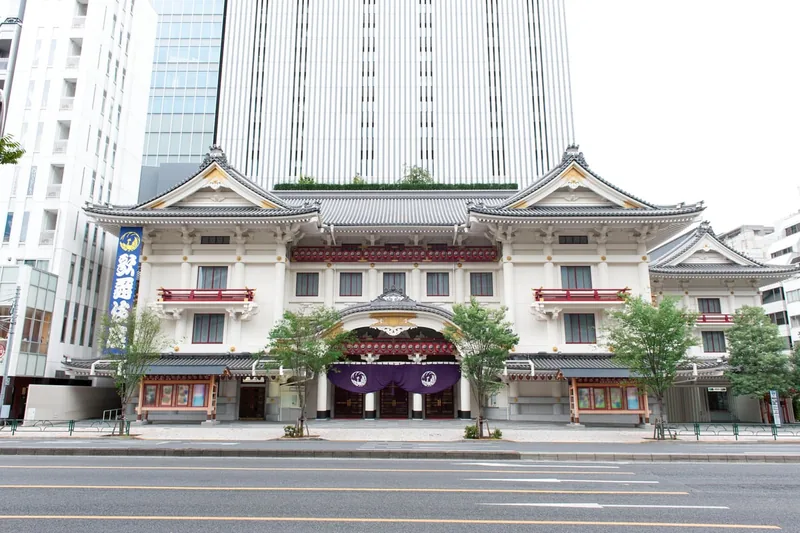
This guide walks through a first visit at Kabuki-za in Ginza, the theatre that runs kabuki almost every month. For buying the ticket itself, our guide to buying kabuki tickets covers the online, phone and box-office routes.
The quick answer
Yes, kabuki works for first-timers: a full part lasts about 3 to 4 hours with intervals, and English captions follow the dialogue. There is no dress code. Phones go off, photos are not allowed, and you eat only in the intervals. The Kabuki-za ticket includes the caption device and a 1st or 2nd-class seat, from $94.
Is a kabuki show worth it if you don't speak Japanese?
Yes. Most of kabuki is visual and musical, and English captions explain the dialogue as it happens. Foreigners are welcome at every Kabuki-za performance.
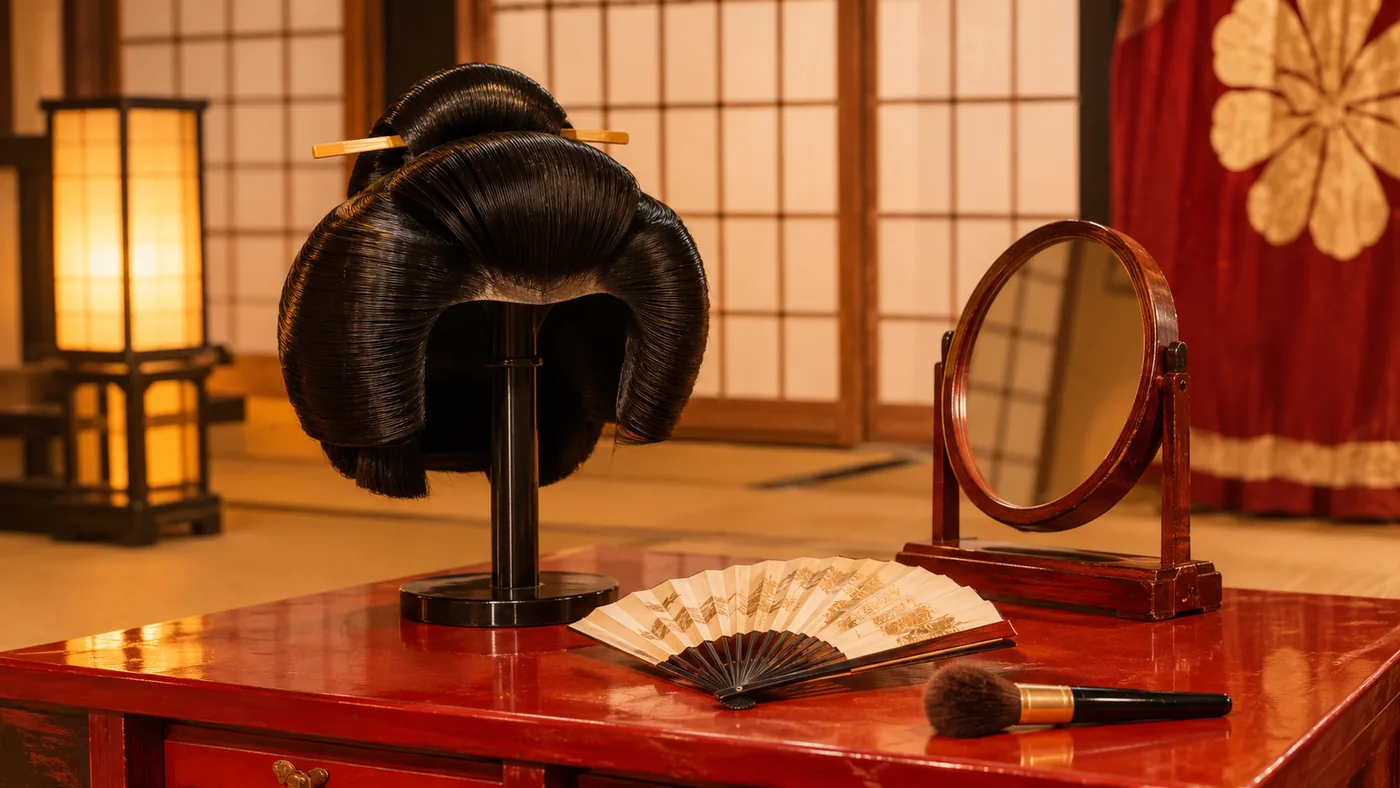
Much of what you will remember needs no translation. Actors enter along the hanamichi, a raised walkway that runs through the audience to the stage, so a hero may stop a few metres from your seat. Musicians play live, on stage or from behind a screen. At a high point an actor freezes in a mie, a held pose with a fierce stare, and the drums and wooden clappers mark it. Stagehands dressed in black, the kuroko, move props in plain view, and you are meant to treat them as invisible.
The words are the hard part, and the captions solve that. On the Kabuki-za ticket the device is part of the price. Angelina put it simply: "Super fun! The show was interesting and the subtitle device worked great." (Apr 2026) Teresa added: "The package included a translation unit that was invaluable." (Apr 2026) The ticket is 4.8 out of 5 from 259 reviews.
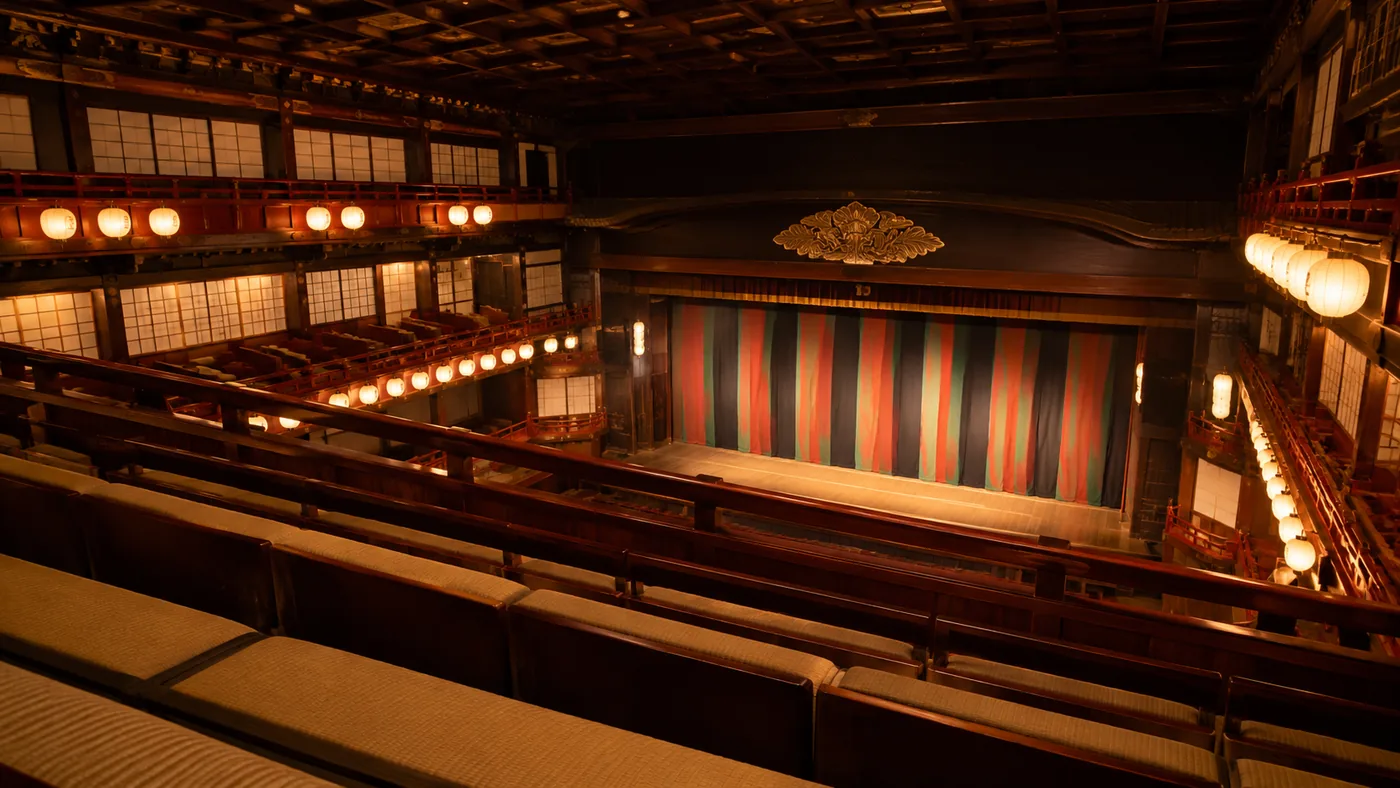
UNESCO, which lists kabuki as Intangible Cultural Heritage, calls it the most popular of Japan's traditional theatre forms. Four centuries in, it still plays a 1,808-seat theatre in Ginza almost every month.
A full part at Kabuki-za with English captions in the ticket and free cancellation up to 2 days before.
Explore the Kabuki-za ticket Tour detailsHow long does a kabuki play last, and which part should you pick?
A full part (a matinee or an evening) runs about 3 to 4 hours, with intervals between 2 or 3 plays. Single plays and dances last from about 30 minutes to 2 hours.
Kabuki-za does not show one long play. Each part is a bill of about three pieces, usually a drama and a dance, with a break between them, and one ticket covers the whole part. In two-part months the matinee starts at 11:00 and the evening at about 16:30. Here is how November 2026 runs, with the whole of Kanadehon Chushingura, the story of the 47 loyal retainers, split across the day:
| Part | Times (November 2026) | On stage |
|---|---|---|
| Matinee | 11:00 to about 15:42 | Chushingura Acts 1, 3 and 4, then the michiyuki travel dance |
| Evening | 16:30 to about 21:17 | Chushingura Acts 5, 6, 7 and 11 |
| December 2026 | Three parts at 11:00, 14:30 and 18:00 | Shorter parts, 2 to 25 December, 4,500 to 17,000 yen |
Which part suits a first visit? Pick by your day, not by the title. A matinee leaves the evening free for Ginza; an evening part fits after a day of sightseeing. Three-part months such as December give shorter parts at lower prices. If 3 hours sounds long, a 4th-floor single act is a short taster, explained in our single-act tickets guide.
Read the story before the curtain. Kabuki-za hands out free English flyers with story overviews, and the Japanese programme booklet has a detailed English synopsis at the back. The Kabuki Plays Guide, an English database linked from the Kabuki Official Website, has most plays by title.
How do the English captions at Kabuki-za work?
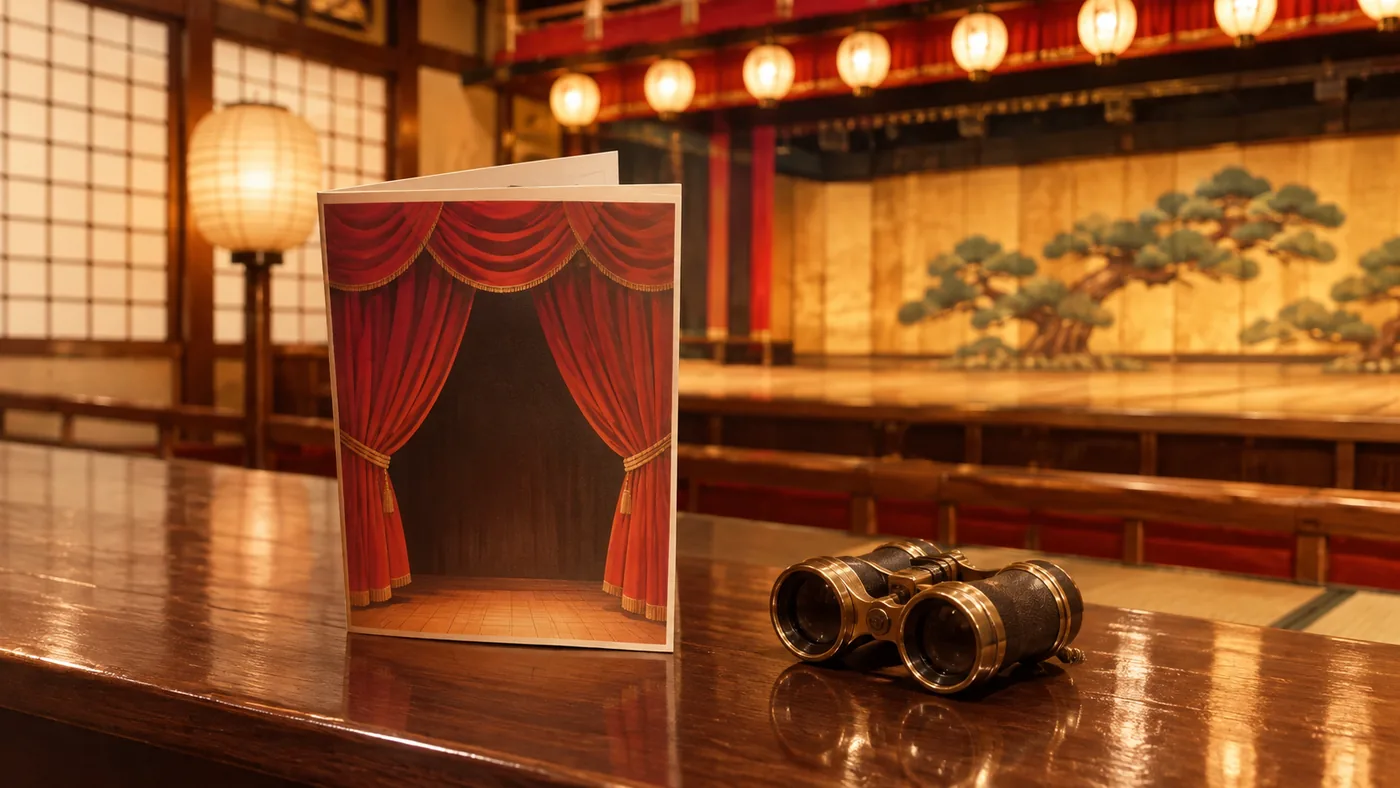
A small handheld screen shows the dialogue in English, in time with the stage. English or Simplified Chinese captions can be rented at Kabuki-za for 1,500 yen per full part or 1,000 yen per single act, cash only.
The captions run live with the performance, so you look down for a line and back up for the pose. You rent the device on the ground level for a full part (single-act seats rent theirs on the 4th level), and you hand it back at the end. The service is Kabuki-za's own; other theatres differ, and Shinbashi Enbujo, for example, has no English earphone guide but prints an English synopsis in its programme.
- On the GetYourGuide ticket: English or Simplified Chinese captioning is included in the price, per the listing.
- Japanese earphone guide: a spoken commentary in Japanese, 800 yen per part in November 2026.
- Very short acts: captioning may not be offered for them, per Kabuki-za.
- Opera glasses: for rent for seats on the 1st to 3rd levels.
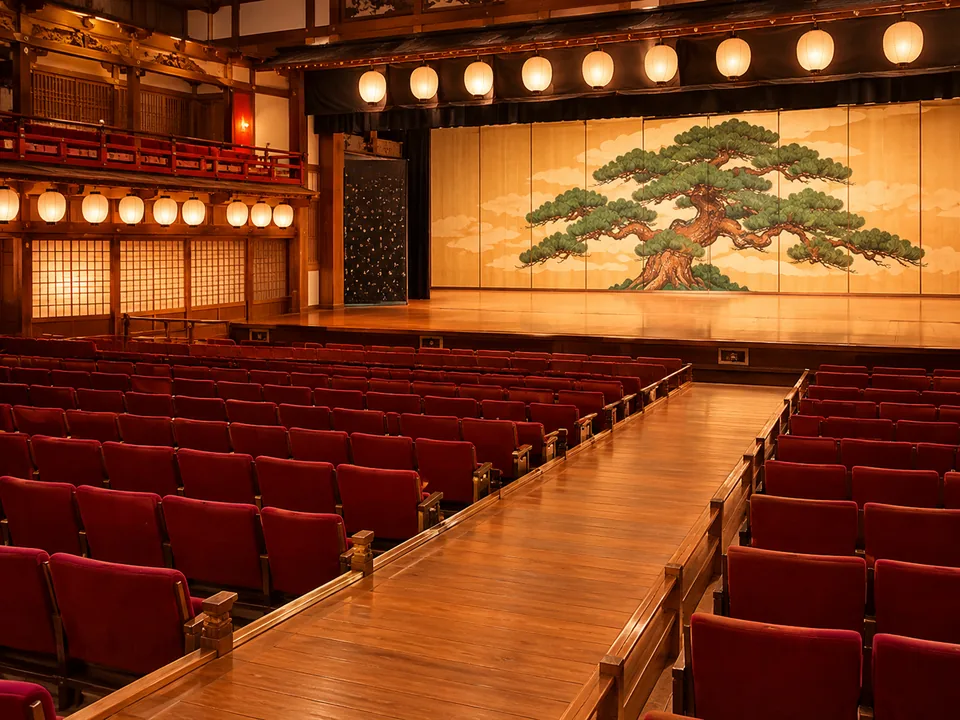
Is there a dress code for kabuki?
No. Kabuki-za says to dress as you would for shopping or for another theatre. Take off hats in the auditorium and keep hairstyles low so the people behind can see.
Jeans, trainers and a jacket are all fine. Some women wear kimono, more often on opening days, and Kabuki-za marks a Kimono Day in some programmes (24 January 2027 is one). Nobody is turned away for plain clothes.
Think about the seat instead. A full part means 3 hours or more sitting still, so wear layers you can adjust, and leave big bags outside the row. Kabuki-za has 200-yen coin lockers, open from the theatre's opening time, which take a coat or a few shopping bags.
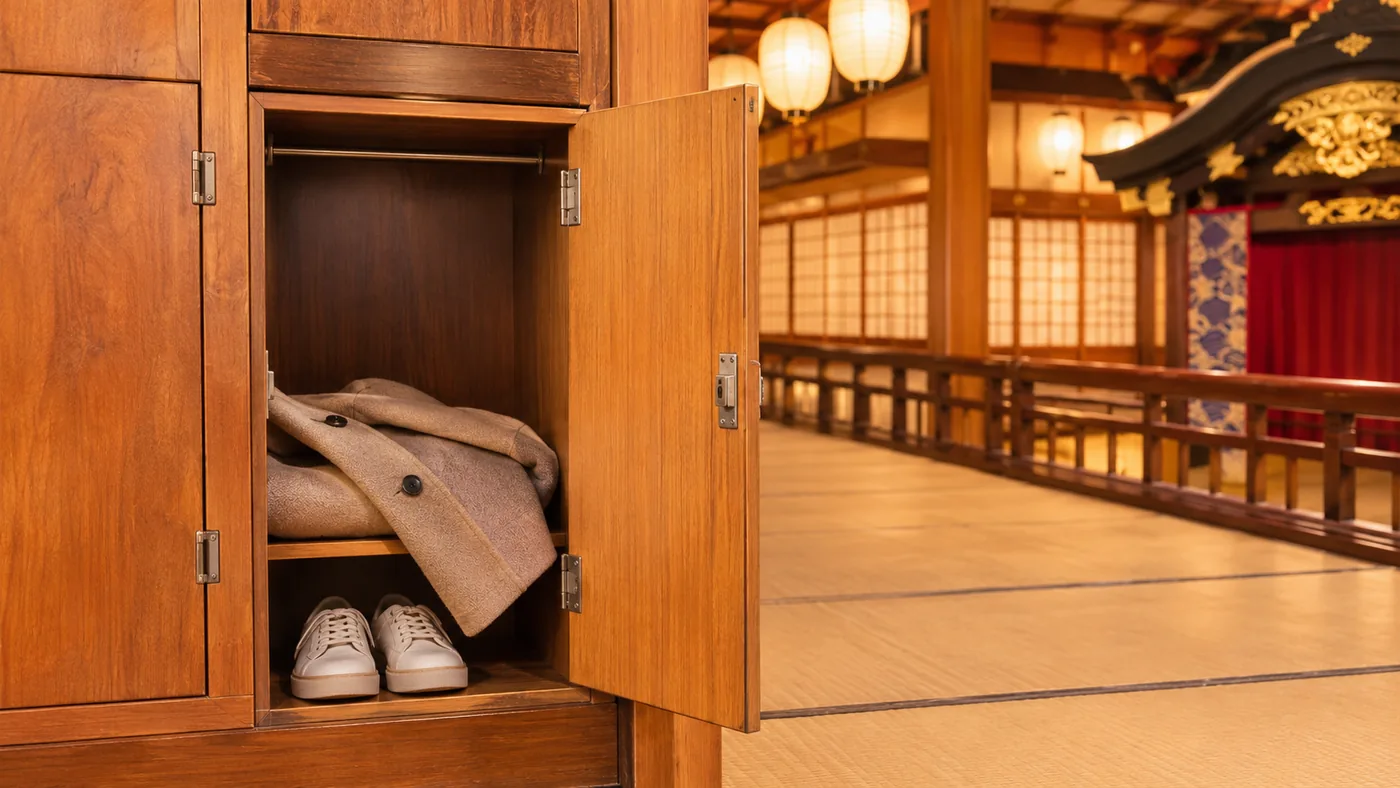
What are the etiquette rules: phones, photos and talking?
Switch phones and smartwatches off, not just to silent. No photos or video during the performance, even without flash. No talking, and keep your back against the seat.
The rest is common sense, and Kabuki-za lists it plainly:
- Be seated 5 minutes before the start: doors open about 30 minutes before.
- Plastic bags: unpack snacks before the curtain; the rustle carries.
- Leaning forward: it blocks the view behind you, so sit back.
- Empty seats: stay in your own, even if a better one is free.
- Photos: fine in the lobby and outside; not in the auditorium during the play.
Applause is normal at the end of a scene or a dance. Want a looser evening where photos with the actors are part of the show? The Asakusa Mokubakan show is taishu engeki, kabuki's popular cousin, with photo time with the performers and cash tips handed to them, per the listing.
Taishu engeki in a century-old Asakusa theatre: dance, drama and onnagata in up to 90 minutes.
Check dates for the Asakusa popular theatre showCan you eat during a kabuki show?
Yes, at your seat during the intervals, not while the play is on. Bento boxes, snacks and drinks are sold inside the theatre and at Kobikicho Square on B2, and you may bring your own food.
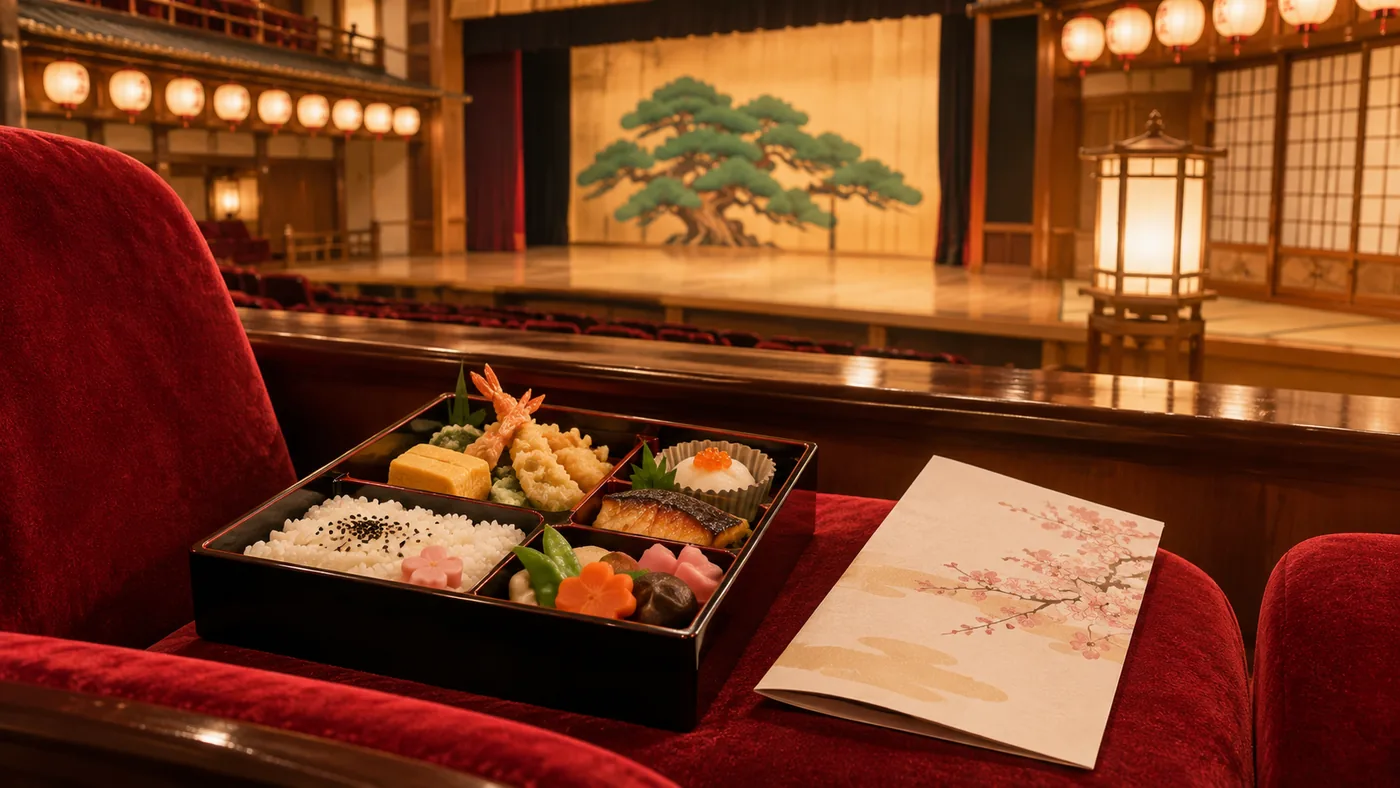
The interval meal is part of the visit. The makunouchi bento, "between the acts", takes its name from these breaks, and Kabuki-za sells boxed meals and limited-time items for each programme. This November (2026) the tie-ins are a Chushingura Gozen set and an Ako Gishi Bento, named after the play.
- Kobikicho Square (B2): bento counters, snack stalls, souvenirs and a convenience store, linked to Higashi-ginza Station by Exit 3.
- Restaurants inside: Japanese restaurants for a sit-down meal in the interval; booking is advised on +81 3 3545 6820 (Japanese only).
- Drinks: on floors 1 to 3, and beer and sake at the Hanakago bar on the 3rd level.
Buy the bento before you go in. The main interval is long enough to eat, but not to queue and eat.
Why do people shout during kabuki?
It is kakegoe: short calls from expert fans at key moments, often the actor's house name, such as "Naritaya!" for the Ichikawa Danjuro line. It is a welcome part of the show, not rudeness.
The calls come at entrances, exits and the mie poses, timed to the drums. Another one you may hear is "Mattemashita!", roughly "we were waiting for this!". In Tokyo the regular callers belong to small guilds with a long relationship with the theatre.
Leave the calling to them. The timing is a skill, and a stray shout lands badly. Your part is to clap when a scene or a dance ends.
Curious how the actor feels on the other side? At the kabuki actor experience in Gifu you go into kumadori make-up, wig and costume and perform a short scene on the stage of a wooden playhouse over 100 years old, guided by a local kabuki master.
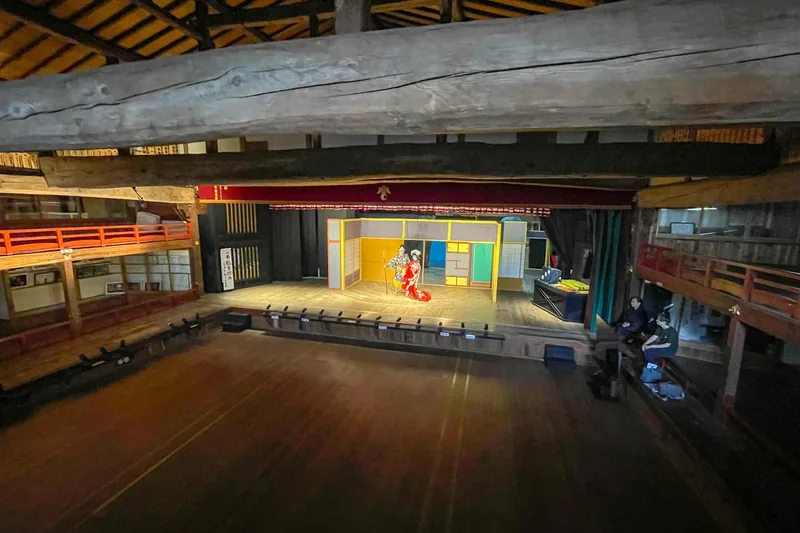
Kabuki make-up, wig and costume, then your own scene on a 100-year-old stage in Mizunami, Gifu.
Explore the kabuki actor experience in Gifu Tour detailsCan children go to kabuki?
Yes. At Kabuki-za children aged 4 and over need their own ticket; children aged 3 and under can sit on an adult's lap for free, though this may vary by production. The GetYourGuide ticket is not for children under 4.
A full part is long for small children, so plan the day around it. Take a child who gets restless to the lobby, as Kabuki-za asks. Kabuki-za also runs a childcare service for its performances, with bookings opened in advance (December 2026 bookings opened on 2 November 2026).
For a shorter first taste with children, two options on this site work well:
- A single act: one act from the 4th floor, much shorter than a full part.
- The Asakusa bugaku show: a 1-hour samurai-arts show by Kaminarimon, where everyone tries the postures, all ages welcome and free for children under 4, per the listing.
The Mokubakan show in Asakusa is not for children under 10, and the Osaka samurai and kabuki show has mature themes, so check each listing before you book for a family.
A 1-hour samurai-arts show by Kaminarimon, then try the sword postures and noh gestures yourself.
Check dates for the Asakusa bugaku showFrequently asked questions
Can foreigners watch kabuki?
Yes. Kabuki-za sells tickets in English online and by phone, and English captions can be rented for 1,500 yen per full part. On the GetYourGuide ticket the captions are included.
What time should I arrive at Kabuki-za?
Doors open about 30 minutes before the start, and you should be seated 5 minutes before. Arrive early enough to buy a bento and collect the caption device.
Can I take photos at kabuki?
Not during the performance, even without flash, and phones must be switched off. Photos in the lobby and outside the theatre are fine.
Is kabuki on every day?
Kabuki-za runs a programme for about 3 to 4 weeks most months, with rest days: in November 2026 there are no shows on 9 and 17 November.
Ready to book
Choose your ticket
Free cancellation on every option: Kabuki-za Kabuki Show Ticket with English Captions up to 2 days before; Asakusa Taishu Engeki Show at Mokubakan Theatre up to 24 hours before; Kabuki Actor Experience at Aioi-za Theatre, Gifu up to 24 hours before. Prices are from-prices in USD and move with the season.
Kabuki-za Kabuki Show Ticket with English Captions
- Ticket for one full part (matinee or evening)
- First-class or second-class A seat, by option
- English or Simplified Chinese caption service
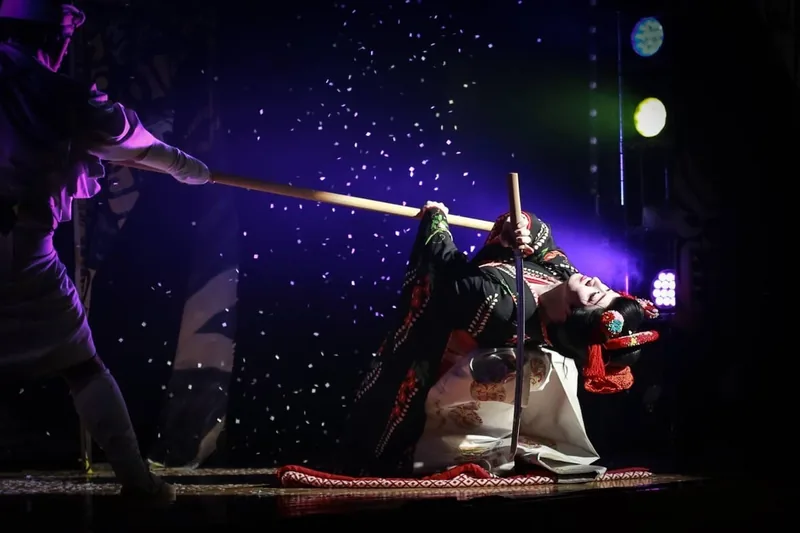
Asakusa Taishu Engeki Show at Mokubakan Theatre
- One taishu engeki performance (up to 90 minutes)
- Photo time with the performers
- Guide option: English introduction and a canned drink
Kabuki Actor Experience at Aioi-za Theatre, Gifu
- Museum Nakasendo visit
- Kumadori make-up, wig and costume
- Rehearsal and stage scene with a local kabuki master