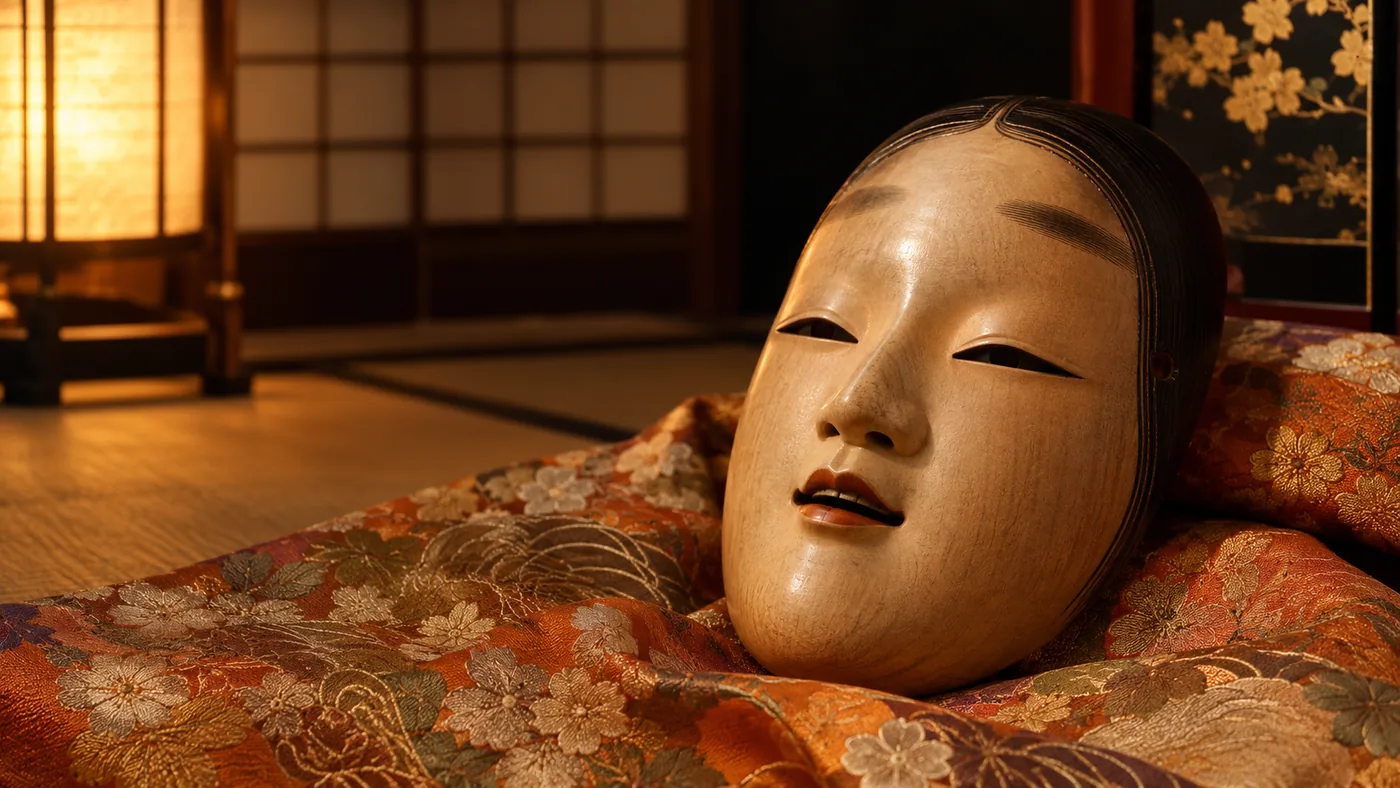
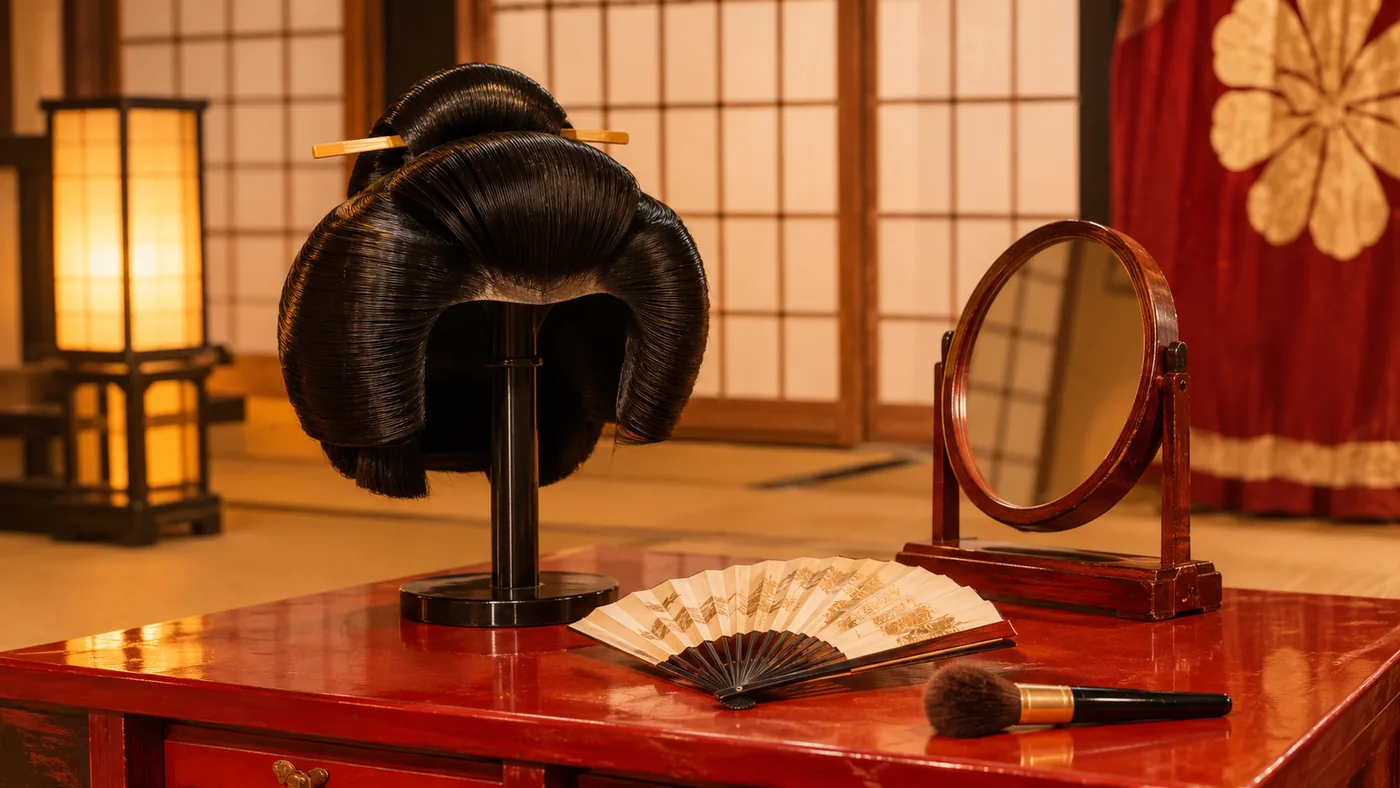
Booking choice: The Kabuki-za ticket, from $94 per person. Check dates Tour details
Kabuki is Japanese through and through, and it has more than 400 years of history behind it. It started as street entertainment, was banned twice in its first half-century, and was pushed to the edge of Edo by the shogunate. It came back each time, and since 2008 it sits on UNESCO's list of the world's intangible heritage.
The sections follow the questions people ask most, from what the word means to whether kabuki is still popular. Every date below comes from an official or a standard reference source, named under each section.
The quick answer
Kabuki dates from 1603, when Izumo no Okuni danced on the dry bed of the Kamo River in Kyoto. Women were banned from the stage in 1629 and boy actors in 1652, which is why grand kabuki is still all-male, with onnagata in the female roles. UNESCO inscribed it in 2008. You can watch it most months at Kabuki-za in Ginza, from $94 with English captions.
What does the word kabuki mean?
The three characters read ka (song), bu (dance) and ki (skill). They were chosen for their sound: the word most likely comes from kabuku, "to lean" or to be out of the ordinary.
In the early 1600s kabukimono were the flamboyant eccentrics of the streets, oddly dressed and swaggering, and Okuni's shows borrowed their style. The polite characters for song, dance and skill came later and stuck, and the Kabuki Official Website still explains the word that way.
English picked up the word early. Merriam-Webster dates its first known use to 1899. In American politics "kabuki" or "kabuki theater" is slang for a staged show with no real substance, used by pundits since the early 1960s, per Dictionary.com. That meaning says more about politics than about the art.
How old is kabuki, and who started it?
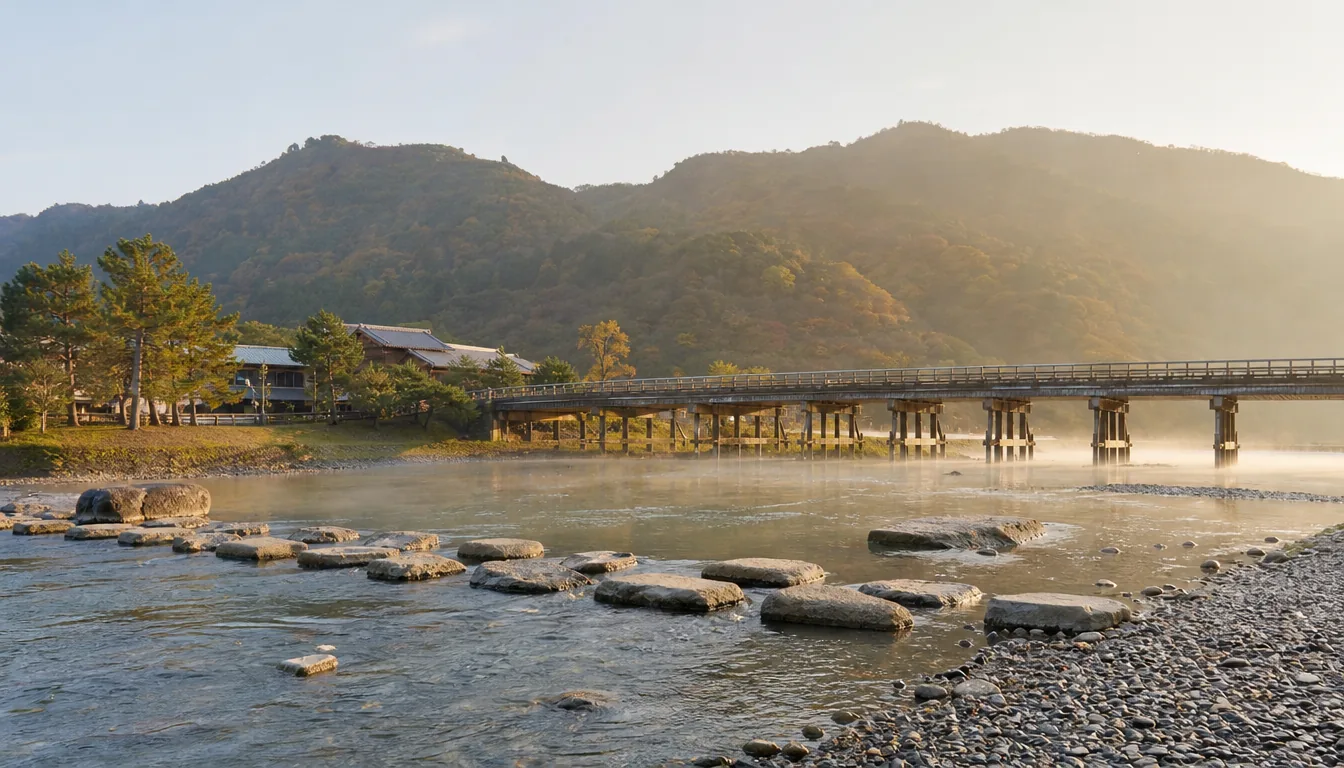
About 420 years. Izumo no Okuni, a former attendant of the Izumo Grand Shrine, began performing in 1603 on the dry bed of the Kamo River in Kyoto.
Okuni's troupe was made up of women who played both male and female roles. Her dances drew crowds at Shijo-gawara, the riverbank by today's Shijo bridge, and at Kitano Shrine. Other troupes copied the style within a few years, and "women's kabuki" spread to other cities.
Kyoto keeps the memory. A statue of Okuni stands by the Kamo River, not far from Minamiza, the theatre at the east end of Shijo-ohashi bridge whose roots go back to the theatres licensed in the city in 1614 and 1615.
Why was kabuki banned, and when?
The shogunate banned women from the stage in 1629, then banned the boy actors who replaced them in 1652. Both bans were about public morals: the performers were also sought out as companions, and the crowds brought fights.
Each ban changed kabuki rather than ending it:
| Year | What happened | What came next |
|---|---|---|
| 1603 | Okuni dances in Kyoto | Women's troupes spread |
| 1629 | Women banned from the stage | Wakashu kabuki: troupes of adolescent boys |
| 1652 | Boy actors suppressed | Yaro kabuki: adult men in every role, the start of the onnagata |
| 1841 to 1843 | Tenpo Reforms: Edo's three licensed theatres moved to Saruwaka-machi in Asakusa | Kabuki carries on at the edge of the city |
| 1887 | Emperor Meiji attends a performance | Kabuki becomes respectable theatre |
| 1889 | The first Kabuki-za opens in Ginza on 21 November | Five buildings on the same site by 2013 |
After the Second World War the Allied occupation briefly restricted kabuki, and plays of feudal loyalty such as Chushingura were held back for a time; the restrictions were lifted by 1947.
Why is kabuki performed only by men?
Because of the 1629 ban. Once women and then boys were barred, adult men took every role, and the onnagata, actors who specialise in female roles, became an art of their own. Mainstream grand kabuki is still all-male.
Onnagata do not imitate women; they build an ideal of femininity out of posture, voice and movement, trained from childhood. UNESCO names the onnagata next to the two main male acting styles: aragoto, rough and bold, and wagoto, soft and gentle.
Can girls do kabuki? Yes, outside the grand kabuki of Kabuki-za. The all-female Ichikawa Shojo Kabuki troupe debuted in 1953, and Nagoya Musume Kabuki, a women's troupe, was founded in 1983 by Ichikawa Ouka. The original "female version" is the one Okuni started: onna kabuki, women's kabuki.
For male actors in female roles up close, the Asakusa Mokubakan show is taishu engeki, kabuki's popular cousin, where a touring troupe's onnagata dance in colourful costume, in a theatre in Asakusa that has run for over a century.
Onnagata, dance and drama by a touring troupe in Asakusa, with photo time with the performers.
Check dates for the Asakusa popular theatre showHow did kabuki grow in the Edo period?
Through the Genroku era, around 1700, when playwrights and star actors created the forms still played today, and in spite of the shogunate, which kept the theatres in licensed districts.
Chikamatsu Monzaemon wrote plays for both puppets and actors in this era. In Edo, Ichikawa Danjuro I is credited with the mie pose and aragoto, the bold style of superhuman heroes. Theatres added machinery: the revolving stage developed in the Kyoho era (1716 to 1735), and traps that raise actors through the floor were in use by the mid-18th century.
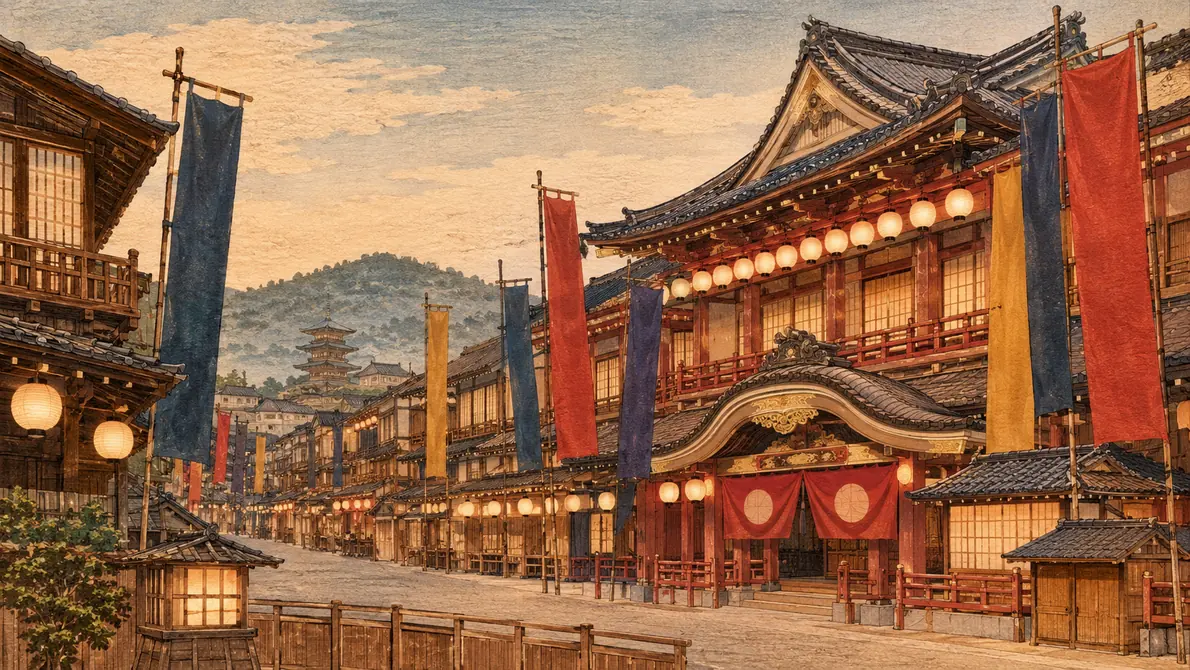
Theatres crowded into licensed streets, with tall signboards, teahouses and woodblock prints of the stars sold outside. After a fire destroyed the Nakamura-za in 1841, the shogunate refused to let it rebuild in central Edo, and the Tenpo Reforms moved all three licensed theatres, Nakamura-za, Ichimura-za and Morita-za, to Saruwaka-machi in Asakusa. The kabuki world stayed there until the Meiji era.
Asakusa is still a theatre district of sorts, and the Mokubakan show plays in the same district where Saruwaka-machi stood.
Who are the great kabuki acting families?
Kabuki passes from father to son, or to an adopted heir, inside acting houses. Each has a yago, a house name, such as Naritaya for the Ichikawa Danjuro line and Otowaya for the Onoe Kikugoro line.
Stage names are inherited in ceremonies called shumei, often across months of special performances. Two recent ones:
- Ichikawa Danjuro XIII Hakuen: took the name on 31 October 2022, after a postponement from May 2020; the succession performances filled Kabuki-za in November and December 2022, and his son debuted as Ichikawa Shinnosuke VIII.
- Onoe Kikugoro VIII: formerly Onoe Kikunosuke V, he took the name in 2025, with his son becoming Kikunosuke VI and the shumei performances starting at Kabuki-za in May 2025.
The families keep their signature plays too. Ichikawa Danjuro VII compiled the Kabuki Juhachiban, the 18 favourite plays of his line, including Sukeroku, Shibaraku and Kanjincho.
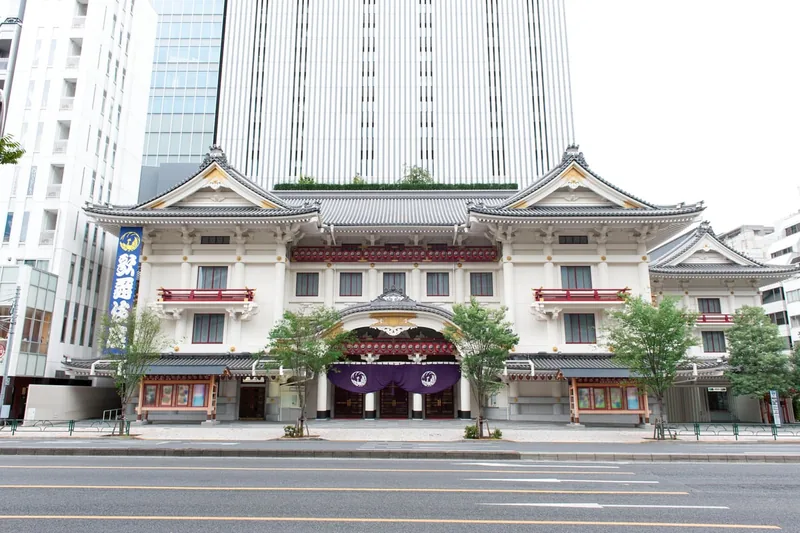
See the acting families on the stage they made famous: a full part at Kabuki-za with English captions.
Explore the Kabuki-za ticket Tour detailsIs kabuki Chinese or Japanese?
Japanese. Kabuki began in Kyoto in 1603 and grew in Edo and Osaka. Older Japanese arts that fed into it, such as noh, do have distant roots in entertainments brought from China in the 8th century.
Kabuki took from everything around it: dances from Okuni's day, plays from noh and from bunraku puppet theatre, and the shamisen, a three-stringed instrument that became the sound of the kabuki stage. Its inventions are Japanese ones: the hanamichi walkway, the revolving stage, the quick costume reveals. Our kabuki vs noh guide compares the forms side by side.
The music can be learned in one sitting. The shamisen lesson in Shimokitazawa starts with a live demonstration of kabuki shamisen by a certified master, then teaches you "Sakura" and a short phrase of kabuki music, and you take home a video of your playing.
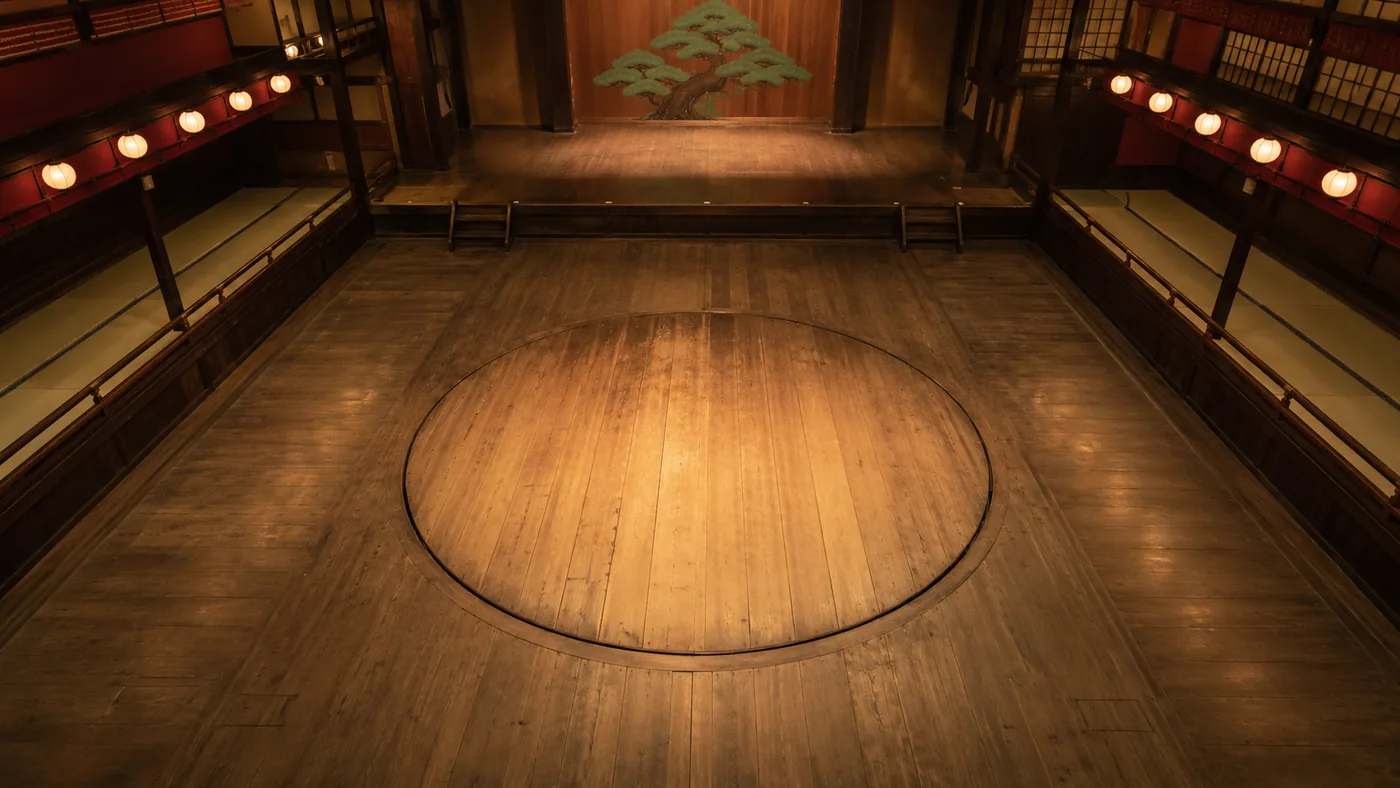
A 90-minute shamisen lesson with a master of kabuki music, with a video of your own playing.
Check dates for the shamisen lesson with kabuki musicIs kabuki still popular today, and can you see it in Kyoto?
Yes. UNESCO calls kabuki the most popular traditional Japanese theatre form, and Kabuki-za in Tokyo stages it almost every month. In Kyoto, Minamiza holds the December Kaomise, from 1 to 24 December 2026.
Where kabuki plays in late 2026:
- Kabuki-za, Tokyo: a new programme almost every month; the November 2026 Kaomise runs 1 to 25 November, and December has three parts, 2 to 25 December.
- Minamiza, Kyoto: the Kaomise, "face-showing" programme, 1 to 24 December 2026, matinee 10:30, evening 16:00, prices from 6,000 to 28,000 yen; an English guide can be rented. Our Minamiza Kaomise 2026 note has the details.
- Osaka: Osaka Shochikuza closed after its last run ended on 26 May 2026; Osaka kabuki plays at Shinkabukiza, with a January 2027 run from 9 to 24 January, on sale from 30 November 2026.
- National Theatre, Tokyo: closed for rebuilding since the end of October 2023, with a target to reopen in fiscal year 2033.
In Kyoto for the Kaomise? The maiko show in a Zen temple is a 90-minute evening of two maiko dances and a parlour game in Koun-ji, a temple near Nanzen-ji usually closed to the public.
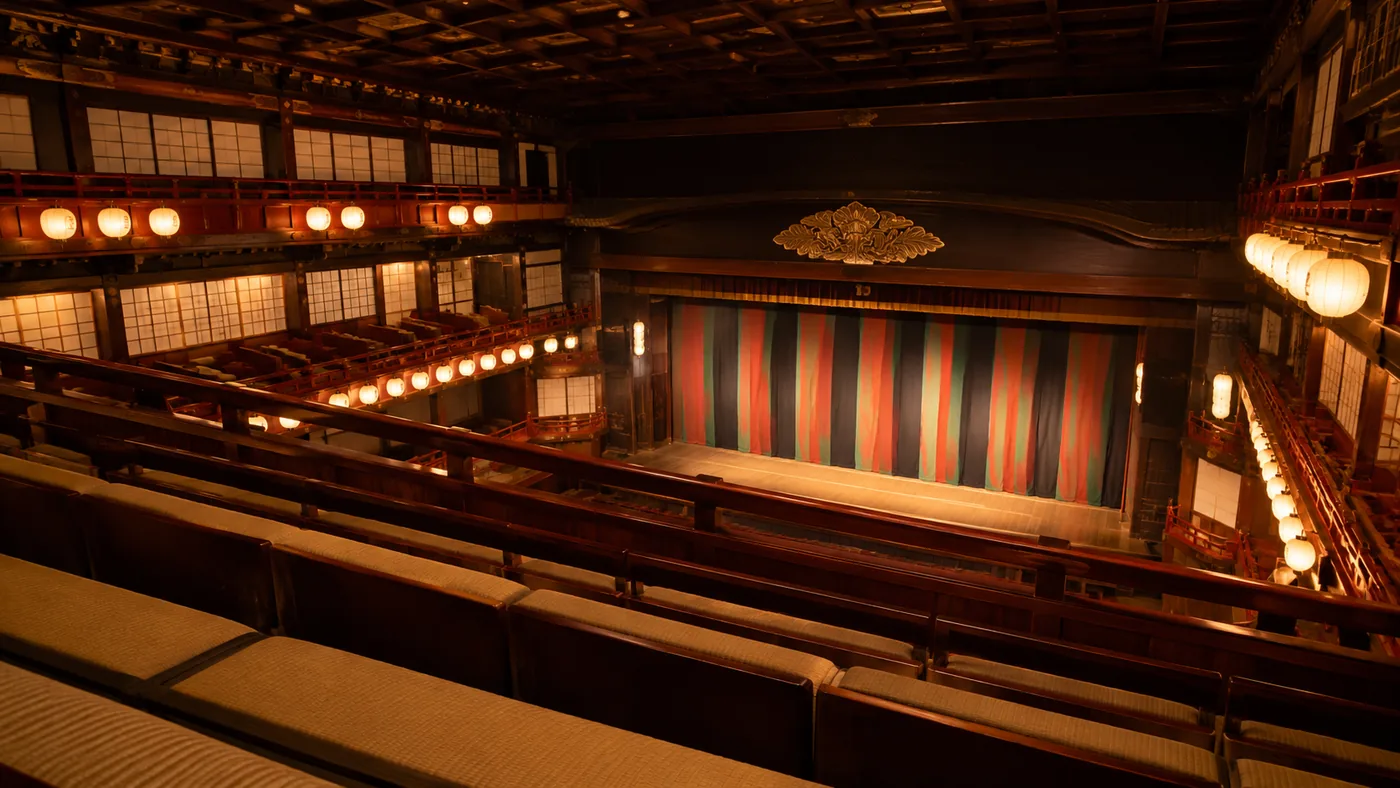
Kabuki-za's monthly programme, a 1st or 2nd-class seat and English captions, with free cancellation up to 2 days before.
Explore the Kabuki-za ticket Tour detailsFrequently asked questions
How old is kabuki?
Kabuki dates from 1603, when Izumo no Okuni began performing in Kyoto, so it is a little over 420 years old.
When was kabuki banned?
Women were banned from the kabuki stage in 1629 and boy actors in 1652. Kabuki itself carried on with adult male actors.
Can women perform kabuki?
Not in mainstream grand kabuki, which is all-male. Women's troupes exist outside it, such as Ichikawa Shojo Kabuki (1953) and Nagoya Musume Kabuki (1983).
Is there kabuki in Kyoto?
Yes. Minamiza, at the east end of Shijo-ohashi bridge, stages kabuki, and its Kaomise runs from 1 to 24 December 2026.
Ready to book
Choose your ticket
Free cancellation on every option: Kabuki-za Kabuki Show Ticket with English Captions up to 2 days before; Asakusa Taishu Engeki Show at Mokubakan Theatre up to 24 hours before; Kabuki Actor Experience at Aioi-za Theatre, Gifu up to 24 hours before. Prices are from-prices in USD and move with the season.
Kabuki-za Kabuki Show Ticket with English Captions
- Ticket for one full part (matinee or evening)
- First-class or second-class A seat, by option
- English or Simplified Chinese caption service
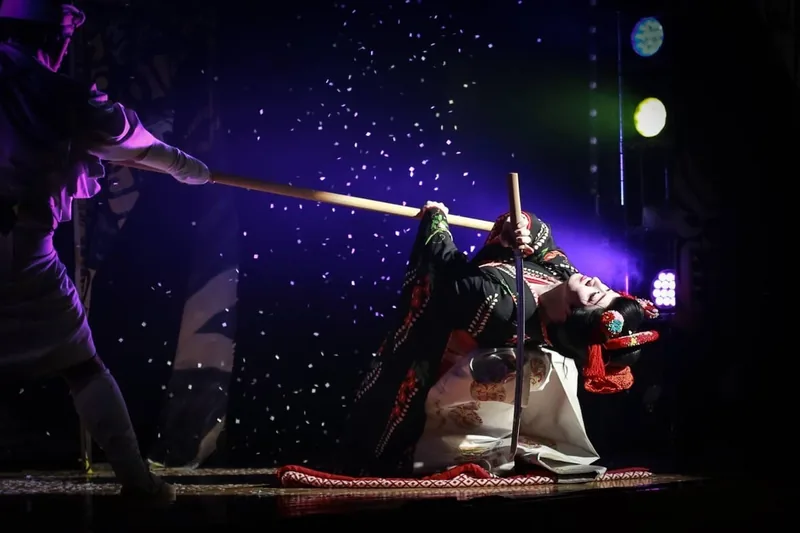
Asakusa Taishu Engeki Show at Mokubakan Theatre
- One taishu engeki performance (up to 90 minutes)
- Photo time with the performers
- Guide option: English introduction and a canned drink
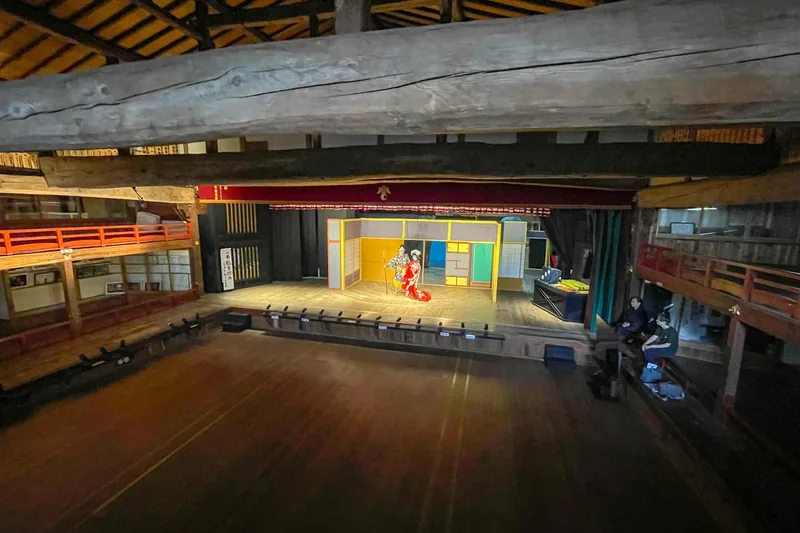
Kabuki Actor Experience at Aioi-za Theatre, Gifu
- Museum Nakasendo visit
- Kumadori make-up, wig and costume
- Rehearsal and stage scene with a local kabuki master